
Working Remotely While Traveling: Your Complete Digital Nomad Setup Guide
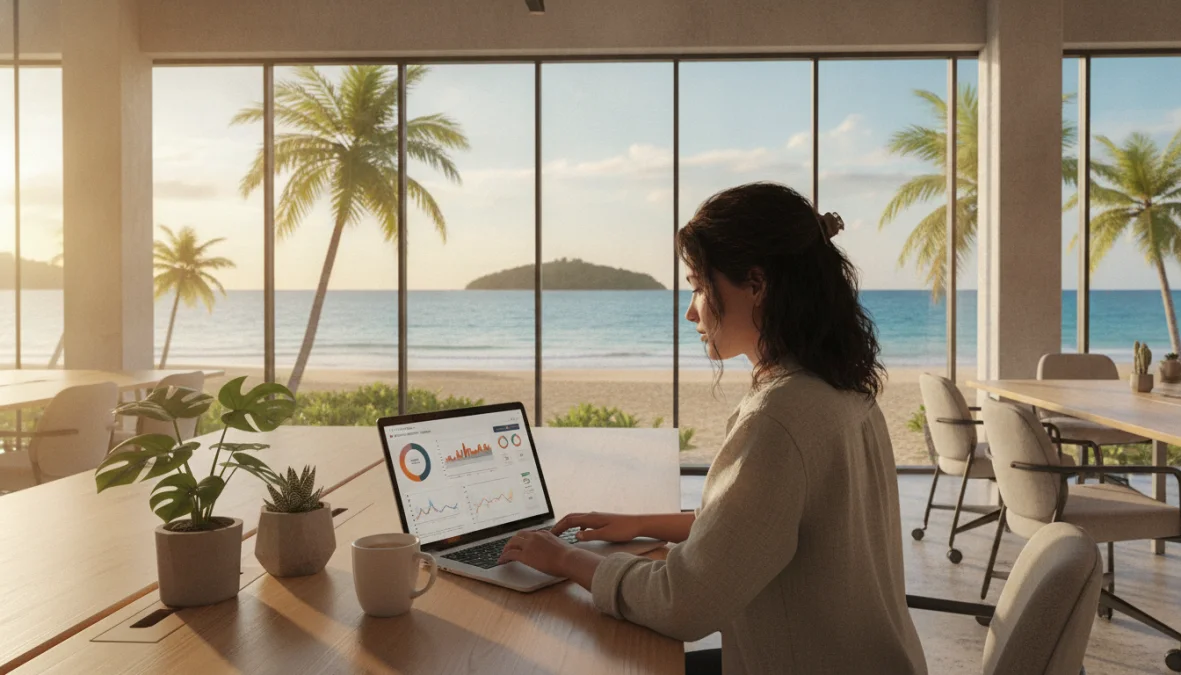
Picture this: you’re sipping espresso at a café in Lisbon, laptop open, finishing up a client presentation before heading out to explore the city’s historic neighborhoods. Or maybe you’re responding to emails from a beachside coworking space in Bali, ocean breeze keeping you cool. This isn’t a fantasy—it’s the reality of learning to work remotely while traveling. But making this lifestyle work requires more than just wanderlust and a WiFi password. You need the right digital nomad setup, solid routines, and a practical approach to balancing productivity with adventure.
Essential Digital Nomad Equipment for Working While Traveling
Your digital nomad setup can make or break your remote work travel experience. The key is finding that sweet spot between having everything you need and not lugging around a 50-pound backpack. Let’s break down the essential equipment for working remotely while traveling.
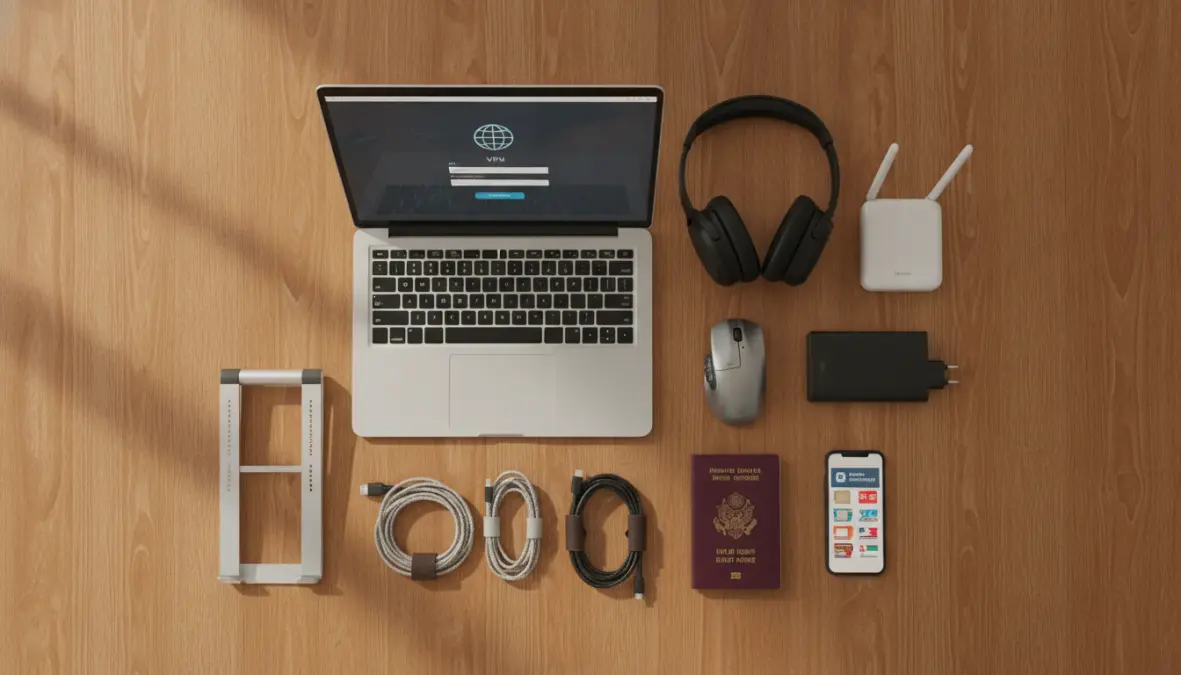
First up: your laptop. This is your livelihood, so don’t skimp here. Look for something lightweight (under 3 pounds ideally), with solid battery life (8+ hours), and enough processing power for your work. MacBook Airs and Dell XPS models are popular among digital nomads for good reason. Always pack a backup external hard drive and consider a tablet as a secondary device for lighter tasks.
Connectivity is non-negotiable when you’re working while traveling. A portable WiFi hotspot serves as your safety net when café WiFi crashes right before that important virtual meeting. Brands like Skyroam or GlocalMe offer global coverage. Pair this with local SIM cards for backup internet and a reliable VPN to secure your connection—especially crucial when accessing company systems or handling sensitive data from public networks.
Your remote work equipment list should include noise cancelling headphones (Sony WH-1000XM series or Bose QuietComfort are industry favorites), a universal travel adapter with USB ports, and at least two high-capacity power banks. Trust me, you’ll thank yourself when you’re working from a park bench with 20% battery and no outlet in sight.
Don’t overlook ergonomics just because you’re mobile. A portable laptop stand (the Roost Stand folds flat and weighs almost nothing) and a compact wireless mouse can prevent neck strain and wrist pain. These might seem like luxuries, but after a few weeks of hunching over your laptop, they become necessities. For those on a budget, even a stack of books can elevate your screen to eye level. Check out organizational solutions to keep all this gear tidy in your luggage.
Setting Up Your Remote Work Travel Routine
Having the right gear is only half the battle. To truly work remotely while traveling successfully, you need routines that keep you productive without sacrificing the whole point of the nomad lifestyle—actually experiencing new places.
Start by establishing core working hours that overlap with your team or clients, even if that means adjusting your schedule across time zones. Time zone management becomes an art form when you’re constantly moving. If you’re traveling from New York to Thailand, you might schedule focused work during your morning (their evening) and keep afternoons free for exploration.
The balance between travel and work remotely requires intentionality. Many successful digital nomads follow the “slow travel” approach, staying in each location for at least a month. This gives you time to find your rhythm, discover reliable workspaces, and actually enjoy your surroundings without the constant stress of packing. For practical tips on making long-term travel sustainable, read our complete guide to full-time travel.
Don’t forget the administrative side. Visa requirements digital nomads need to navigate vary wildly by country. Some nations now offer specific digital nomad visas (Portugal, Croatia, Estonia), while others require tourist visas with restrictions on working. Always research before booking flights. Similarly, understand your tax obligations—just because you’re traveling doesn’t mean the tax man forgets about you.
Finding Reliable Workspaces on the Road
Coworking spaces have exploded globally, and they’re often worth every penny. Platforms like Coworker.com help you find and review spaces before arrival. When evaluating accommodations, always check WiFi speeds—ask hosts for speed test results showing at least 25 Mbps download for video calls. Many Airbnb listings now include WiFi speeds in their descriptions.
Create backup plans for connectivity issues. Know where the nearest coworking space, library, and reliable café are located. Scout these spots during your first day in a new city. Consider noise levels, outlet availability, and whether you’ll need to make minimum purchases to camp out for hours. Some digital nomads swear by hotel lobbies for their combination of free WiFi, comfortable seating, and bathrooms.
Popular destinations like Portugal’s Algarve or Morocco’s Chefchaouen increasingly cater to remote workers, offering dedicated workspaces and fast internet.

Managing Time Zones and Client Communication
Successful virtual meetings on the go require preparation. Use tools like World Time Buddy or Every Time Zone to schedule meetings without math errors. Communicate your location and availability clearly with colleagues—update your Slack status, email signature, and calendar to reflect your current time zone.
Set boundaries early. Just because you’re traveling doesn’t mean you’re on vacation. Make your working hours clear to prevent expectations of 24/7 availability. Equally important: protect your exploration time. Maintaining work life balance as a digital nomad means actually closing the laptop and experiencing the places you’re visiting, whether that’s relaxing at Budapest’s thermal baths or island-hopping from Athens to Santorini.
Embrace asynchronous communication when possible. Tools like Loom for video messages and cloud storage solutions like Google Workspace or Dropbox keep everyone aligned without requiring real-time interaction. This flexibility is one of remote work’s greatest advantages.
Frequently Asked Questions About Working Remotely While Traveling
How much does a digital nomad setup cost?
A best digital nomad setup for beginners ranges from $1,000-$3,000 for equipment (laptop, headphones, accessories), plus ongoing costs like portable WiFi ($8-15/day), coworking memberships ($100-300/month), and travel insurance for remote workers ($50-150/month). Budget-conscious nomads can start with what they have and upgrade gradually.
What internet speed do I need to work remotely?
For basic tasks, 5-10 Mbps works. Video calls need at least 25 Mbps download and 3 Mbps upload. If you’re editing large files or doing video production, aim for 50+ Mbps. Always test speeds before committing to accommodation.
How do digital nomads handle taxes?
This depends on your citizenship and where you’re earning income. US citizens pay taxes regardless of location, while some countries have tax treaties preventing double taxation. Many nomads work with specialized accountants familiar with location-independent work. Track your days in each country carefully.
What are the best countries to work remotely while traveling?
Portugal, Mexico, Thailand, Colombia, and Estonia consistently rank high for their combination of reliable internet, affordable living costs, digital nomad communities, and visa options. South Africa is emerging as another excellent option with favorable exchange rates.
Can I work remotely while traveling on a tourist visa?
This is legally gray. Most countries prohibit “working” on tourist visas, but enforcement varies. Working remotely for a foreign company while traveling differs from taking local employment. Research specific how to work remotely while traveling abroad regulations for each destination, and consider digital nomad visas where available.
The freedom to work remotely while traveling opens up a world of possibilities, but success comes from preparation, not just spontaneity. Invest in quality equipment, establish sustainable routines, and respect both your work commitments and your adventure goals. Start with shorter trips to test your setting up a mobile office for remote work before committing to long-term nomadism. Remember to stay aware of common pitfalls by reading about travel scams to avoid. With the right approach, you’ll find that productivity and exploration aren’t mutually exclusive—they’re the perfect travel companions.