
Travel Budget Planning: Complete Spreadsheet Guide for Long-Term Travelers
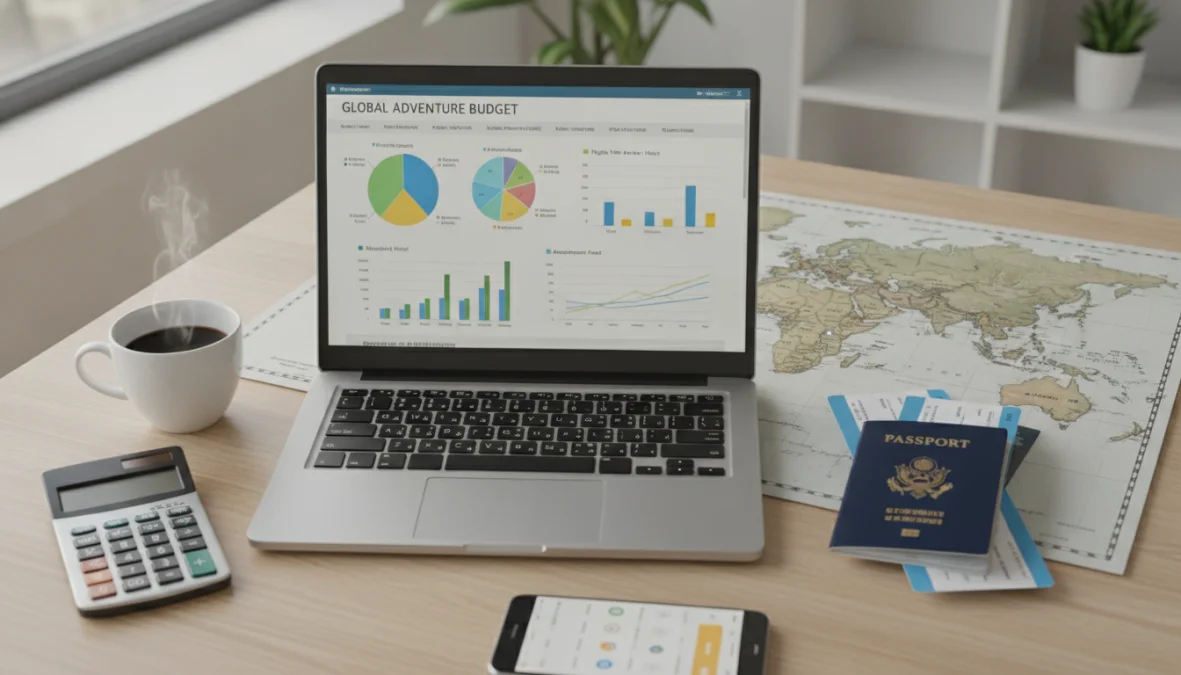
Picture this: you’re three months into your dream year-long adventure, sipping coffee in a Balinese café, when you check your bank account and realize you’ve burned through half your savings already. Panic sets in. Your trip might end six months early, or worse, you’ll need to rush home with credit card debt. This nightmare scenario happens to countless travelers who skip the most crucial step of long-term travel planning: creating a comprehensive budget spreadsheet. While spontaneity has its place in travel, financial chaos doesn’t. Proper travel budget planning isn’t about restricting your adventures—it’s about making them sustainable, stress-free, and potentially even longer than you originally imagined.
Why Travel Budget Planning Makes or Breaks Long-Term Adventures
Here’s a sobering truth: studies show that nearly 40% of long-term travelers end their trips earlier than planned due to financial issues. The difference between a two-week vacation and long-term travel planning is massive. Short trips allow you to splurge a bit, knowing your regular paycheck awaits at home. But when you’re traveling for six months, a year, or indefinitely, every unnecessary expense compounds into potentially weeks or months cut from your journey.
The benefits of robust travel cost tracking extend beyond simply not running out of money. A well-maintained budget spreadsheet helps you identify which destinations offer the best value, when you can afford to splurge on that once-in-a-lifetime experience, and how long your savings will actually last. It transforms vague world travel expenses into concrete numbers you can work with and adjust.
Consider two scenarios: Sarah underspent in Southeast Asia by staying in the cheapest hostels and skipping activities, missing incredible experiences to save $10 here and there. Meanwhile, Jake overspent in Europe during his first two months, forcing him to skip South America entirely. Both failed because they lacked a flexible system that balanced enjoyment with sustainability. A proper travel budget spreadsheet would have shown Sarah she could afford those cooking classes, and warned Jake he was burning through funds at an unsustainable rate.

Building Your Travel Budget Spreadsheet: Essential Categories and Structure
Creating an effective travel budget spreadsheet starts with understanding your core expense categories. Every long-term traveler should track: accommodation costs (hostels, hotels, Airbnbs), transportation budget (flights, buses, trains, local transport), food and drinks, activities and entertainment, travel insurance, visa fees, gear and replacements, healthcare, communication (SIM cards, data), and an emergency fund (typically 15-20% of your total budget).
When learning how to create a travel budget spreadsheet, structure is everything. Start with a master overview sheet showing your total savings, projected trip length, and average monthly burn rate. Then create separate tabs for pre-trip planning, monthly breakdowns, and daily expense logging. Your trip budget calculator should include formulas that automatically calculate daily averages, convert currencies using current rates, and show how many days remaining at your current spending pace.
Essential formulas include: daily average (sum of expenses divided by days traveled), category percentages (each category divided by total spending), and remaining budget projections. Create dropdown menus for expense categories and countries to maintain consistency. Use conditional formatting to highlight when you exceed your daily spending allowance in any category—a visual warning that’s impossible to ignore.
Best practices for organizing your backpacking budget template include color-coding countries or regions, separating one-time costs from recurring expenses, and creating visual dashboards with charts showing spending by category and country. This transforms raw data into actionable insights. For example, if your accommodation is consistently 45% of spending instead of the planned 30%, you’ll spot this immediately and adjust.
Pre-Trip vs On-the-Road Budgeting: Two Different Approaches
Your long-term travel planning spreadsheet serves two distinct purposes. Pre-trip, it’s a research and estimation tool. You’ll input average costs for different regions (Southeast Asia might be $30-50 daily, Western Europe $80-120), add buffer percentages for unexpected costs, and calculate your savings goals. This phase answers the critical question: how much money needed for long-term travel?
Once you’re traveling, the spreadsheet transforms into a real-time tracking system. Instead of estimates, you’re logging actual expenses daily or weekly. Digital nomad budgeting requires particular attention here, as income streams fluctuate. Your on-the-road approach should include weekly reviews where you compare actual spending against projections, identify patterns (are you spending too much on eating out?), and adjust future estimates. The spreadsheet evolves from static plan to living financial companion.
Advanced Features: Automated Tracking and Forecasting Tools
While manual expense tracking works, advanced features make life easier. Some travelers integrate their spreadsheets with banking apps using tools like Tiller Money or YNAB, automatically importing transactions. Automated currency conversion formulas using Google Sheets’ GOOGLEFINANCE function ensure your multi-country budget stays accurate as exchange rates fluctuate.
Budget forecasting takes your travel cost tracking further by analyzing spending patterns. Create formulas that project how long your remaining funds will last at current spending rates, or calculate how reducing daily expenses by $10 would extend your trip. Set up conditional alerts that flag when weekly spending exceeds targets. Scenario planning tools let you model questions like “What if I spend three months in cheaper countries to afford one month in expensive Japan?” These forecasting capabilities transform your spreadsheet from passive record to active planning tool.
Practical Travel Budget Planning Strategies for Different Travel Styles
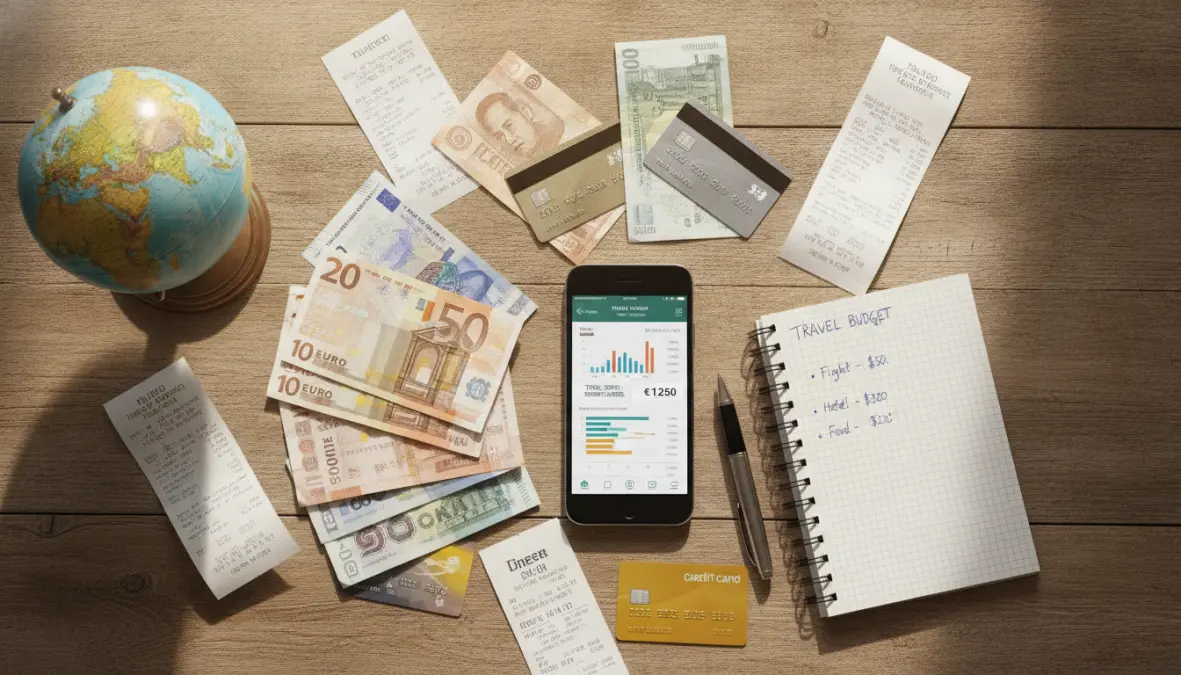
Budget requirements vary dramatically by travel style. A backpacker using a backpacking budget template might target $40-60 daily in Southeast Asia, staying in hostels, eating street food, and prioritizing experiences over comfort. Meanwhile, digital nomad budgeting often involves higher costs ($60-100 daily) for reliable WiFi, comfortable workspaces, and longer stays in each location. Slow travelers who stay months in one place typically spend less than constant movers, while luxury long-term travelers might budget $150-200+ daily but still need tracking systems to avoid waste.
Real-world examples illuminate these differences. In Southeast Asia, budget-conscious travelers can thrive on $1,200-1,500 monthly, covering basic accommodation, local food, occasional activities, and transport. Eastern Europe runs $1,500-2,000 monthly with similar comfort levels. Western Europe and North America require $2,500-3,500+ for comparable experiences. South America falls in between at $1,500-2,500. If you’re planning specific destinations, resources like our Cape Town budget guide provide concrete cost breakdowns.
Cost-reduction strategies vary by region. In expensive countries, focus on accommodation (longer stays = better rates), cook meals instead of eating out, use slow transport (buses over flights), and balance splurges with saving periods. The key is strategic allocation: spend on what matters most to you, ruthlessly cut what doesn’t. A digital nomad might splurge on co-working spaces while eating cheaply; an adventure traveler invests in activities while accepting basic accommodation. Your spreadsheet should track these trade-offs, showing exactly what you’re getting for your money.
For those transitioning to full-time travel, our comprehensive guide on traveling full-time covers broader financial planning considerations beyond spreadsheets. And don’t forget to leverage travel credit card rewards to reduce transportation and accommodation costs significantly.
FAQ
How much should I budget per day for long-term travel?
Daily budgets vary enormously by region and style. Budget travelers can manage on $30-50 in Southeast Asia, $50-80 in Eastern Europe or South America, and $80-120+ in Western Europe or North America. Mid-range travelers typically double these amounts. The key is researching your specific destinations and building buffers for unexpected costs. Start with regional averages, then adjust based on actual spending during your first few weeks.
What percentage should I add as emergency buffer?
Financial experts recommend a 15-20% emergency buffer for long-term travel. This covers unexpected costs like medical issues, gear replacement, emergency flights home, or simply treating yourself when travel fatigue sets in. Some travelers prefer separating this into a distinct emergency fund rather than mixing it with daily budgets, ensuring it’s only used for genuine emergencies.
Best apps/tools to complement spreadsheets?
Popular companions include Trail Wallet for quick mobile expense logging, XE Currency for real-time exchange rates, and Splitwise for managing shared costs with travel companions. Many travelers photograph receipts using Google Drive or Dropbox for backup documentation. The best spreadsheet template for long-term travel integrates with these tools rather than replacing them.
How to track expenses in multiple currencies?
Create a base currency (usually your home currency or USD) for all calculations. Log expenses in local currency with the exchange rate used, then have formulas automatically convert to your base currency. Google Sheets’ GOOGLEFINANCE function pulls live exchange rates. This approach lets you track travel expenses in Excel or Google Sheets while maintaining accurate totals across dozens of currencies.
How often should I update my travel budget spreadsheet?
Daily logging works best for accuracy but weekly updates work for many travelers. At minimum, conduct weekly reviews comparing actual spending against budgets, and monthly deep-dives analyzing patterns and adjusting future projections. The more frequently you update, the faster you’ll catch problems and make corrections before they derail your trip.
The difference between travelers who successfully complete their long-term adventures and those who don’t often comes down to one thing: sustainable travel budget planning. Your spreadsheet isn’t just numbers on a screen—it’s the tool that transforms impossible-seeming dreams into achievable reality. Whether you’re planning a year-long journey or have already started your adventure, investing time in a robust budget system pays dividends in reduced stress, extended travel time, and the freedom to say yes to experiences that truly matter. Download a free travel budget planning template, customize it to your needs, and take control of your travel finances today. Your future self, six months into an incredible journey with funds to spare, will thank you.