Hostel Travel Guide: Essential Tips for Budget Accommodation and Meeting Fellow Travelers
So you’re ready to dive into the world of hostels? Smart move. Staying in budget traveler accommodation isn’t just about saving money—it’s about joining a vibrant backpacking community, swapping stories with social travelers from around the globe, and experiencing destinations in ways hotels never offer. But let’s be real: your first hostel stay can feel a bit intimidating. Where do you even start with this whole hostel travel guide thing? Don’t worry—whether you’re a seasoned backpacker or planning your first dormitory adventure, this guide will help you navigate everything from booking to bed bugs prevention, ensuring you get the best out of cheap travel lodging without the rookie mistakes.
Choosing and Booking the Perfect Hostel for Your Travel Style
Finding the right hostel can make or break your trip. Start with trusted platforms like Hostelworld and Booking.com, but don’t just click “book” on the cheapest option. Learning how to choose a safe hostel requires reading between the lines of those glowing reviews.
First, focus on recent reviews—anything older than six months might not reflect current conditions. Look for repeated mentions of cleanliness, security, and noise levels. Party hostels are fantastic if you want late-night socializing, but they’re a nightmare if you need quality sleep before that early morning bus. Conversely, quiet hostels might feel isolated if you’re hoping to make friends. As a backpacker accommodation guide principle, match the vibe to your travel goals.
Location matters more than you think. A hostel that’s $5 cheaper but requires two bus rides to reach the city center will cost you time and transport money. Budget hostel tips from experienced travelers emphasize spending a bit more for central locations—you’ll save on taxis and maximize exploration time. If you’re visiting places like Cape Town on a budget, proximity to attractions becomes even more valuable.
Check what facilities are included: free breakfast can save you $5-10 daily, kitchen access lets you cook instead of eating out, and luggage lockers are non-negotiable for security. Read cancellation policies carefully—flexible booking options give you freedom if plans change. For hostel booking advice timing-wise, book 2-4 weeks ahead for popular destinations, but last-minute deals sometimes appear for spontaneous travelers. The best hostels for solo travelers typically advertise organized activities and common areas designed for mingling.
Dormitory Essentials and Hostel Etiquette Rules Every Traveler Should Know
Surviving shared accommodation requires both smart packing and respecting unwritten rules. Let’s break down both aspects of dormitory staying tips.
Packing Smart for Shared Spaces
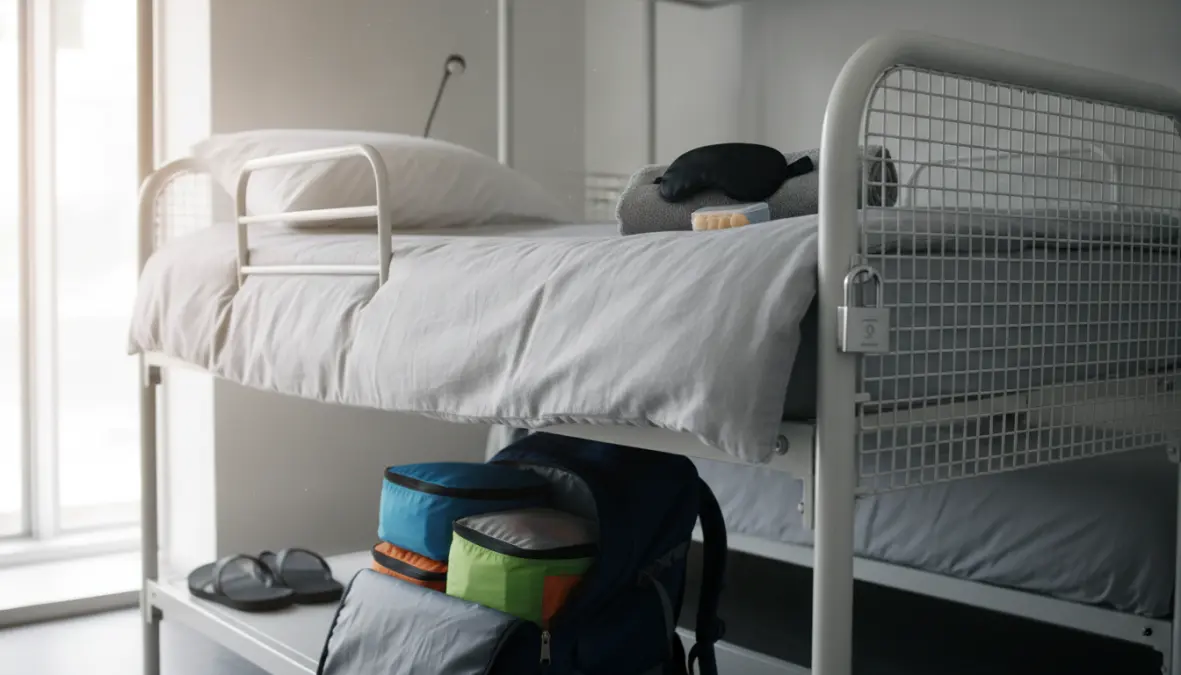
Knowing what to pack for hostel stay starts with the essentials. A solid padlock is absolutely critical—don’t rely on hostel-provided locks. Bring flip-flops or shower shoes (trust me, you don’t want to go barefoot in communal bathrooms). A silk or cotton sleep sheet adds a hygiene barrier, while an eye mask and quality earplugs are essential dorm room essentials for how to sleep well in hostel dorms.
Pack a small headlamp or phone light for navigating dark rooms without waking others. Packing cubes keep your belongings organized in tight spaces—crucial when you’re living out of a locker. A microfiber towel dries quickly and takes minimal space. Keep valuables in a small day bag you can lock to your bed frame overnight.
The Unwritten Rules of Hostel Living
Hostel etiquette rules aren’t posted on walls, but breaking them marks you as a nightmare roommate. Respect quiet hours (usually 10 PM-7 AM)—no loud conversations, phone calls, or rustling through plastic bags when others are sleeping. If you must leave early, pack your bags the night before.
In shared bathrooms, keep showers reasonably short and clean up your hair. In hostel common areas, don’t monopolize seating during peak times. Kitchen etiquette means washing your dishes immediately and labeling any food you store—never assume unlabeled items are fair game. Set multiple quiet phone alarms instead of one blaring tone. If you’re video-calling family, step outside or find a private corner. These tips for first time hostel guests will earn you respect from the backpacking community and make your stay infinitely more pleasant.

Making the Most of Hostel Life: Safety, Socializing, and Money-Saving Tips
This hostel travel guide wouldn’t be complete without maximizing the three pillars of budget accommodation: staying safe, making connections, and stretching your dollars.
Safety first: Always use luggage lockers for passports, electronics, and cash. Many thefts happen because travelers leave valuables on beds or in open bags. Keep your locker key on you at all times—wearing it on a wrist coil while showering prevents loss. Stay aware in common areas, especially late at night. Consider travel insurance that covers belongings—the hostel vs hotel budget comparison shows hostels win on price, but insurance adds peace of mind. For bed bugs prevention, inspect mattress seams upon arrival and keep your bag off the floor.
Building connections: How to meet people in hostels? Start in communal spaces—kitchens, lounges, and outdoor areas naturally facilitate conversation. Join hostel-organized pub crawls, walking tours, or game nights. Simply asking “where are you from?” while cooking dinner opens doors. Respect that not everyone wants to socialize constantly—some travelers need downtime, and that’s perfectly fine.
Maximizing value: To truly travel on a budget, use that shared kitchen. Cooking even half your meals saves hundreds over a long trip. Many hostels offer free breakfast—don’t skip it. Take advantage of free walking tours, city maps, and local tips from staff who know hidden gems tourists miss. If you’re planning extended travel like going full-time nomad, hostel membership cards (HI Hostels) provide discounts. The cheap travel lodging approach extends beyond accommodation—fellow backpackers share money-saving intel about affordable restaurants, free attractions, and transport hacks you won’t find in guidebooks.
FAQ: Common Questions About Hostel Stays
Are hostels safe for solo travelers? Yes, hostels are generally safe, especially highly-rated ones with security measures like keycard access, lockers, and 24-hour reception. Solo travelers often find hostels safer than hotels because there’s a community looking out for each other. Always read safety reviews and trust your instincts.
What’s the difference between private rooms and dorms? Dorms have multiple beds (typically 4-12 people) and cost significantly less. Private rooms offer hotel-like privacy at mid-range prices—perfect if you want hostel atmosphere with personal space. Mixed dorms house all genders; female-only dorms provide additional comfort for women travelers.
How do I secure my belongings? Use provided lockers with your own padlock. Keep valuables in a day bag you can lock to your bed frame. Never leave laptops, cameras, or money unattended. Most thefts are opportunistic—basic precautions eliminate risk.
Can I stay in a hostel if I’m over 30 or 40? Absolutely. While some hostels skew younger, many welcome all ages. Look for “boutique” or “quiet” hostels that attract mature travelers. Age diversity enriches the backpacker experience—don’t self-select out.
What if my roommates are noisy? Politely ask them to keep it down if it’s during quiet hours. If problems persist, notify reception—staff will intervene. Quality earplugs are your backup plan for light disturbances.
Do I need to bring my own towel? Many hostels provide towels free or for a small fee, but bringing a compact microfiber towel ensures you’re never caught without one and saves rental costs over time.
Ready to embrace hostel life? Whether you’re exploring Transylvania’s medieval towns or trekking to Machu Picchu, budget accommodation connects you with fellow adventurers while keeping your wallet happy. Pack smart, respect the space, embrace the community, and you’ll discover that hostels offer so much more than just a place to sleep—they’re where travel memories are made.