
Travel Adapter Guide: Worldwide Power Compatibility and Voltage Essentials
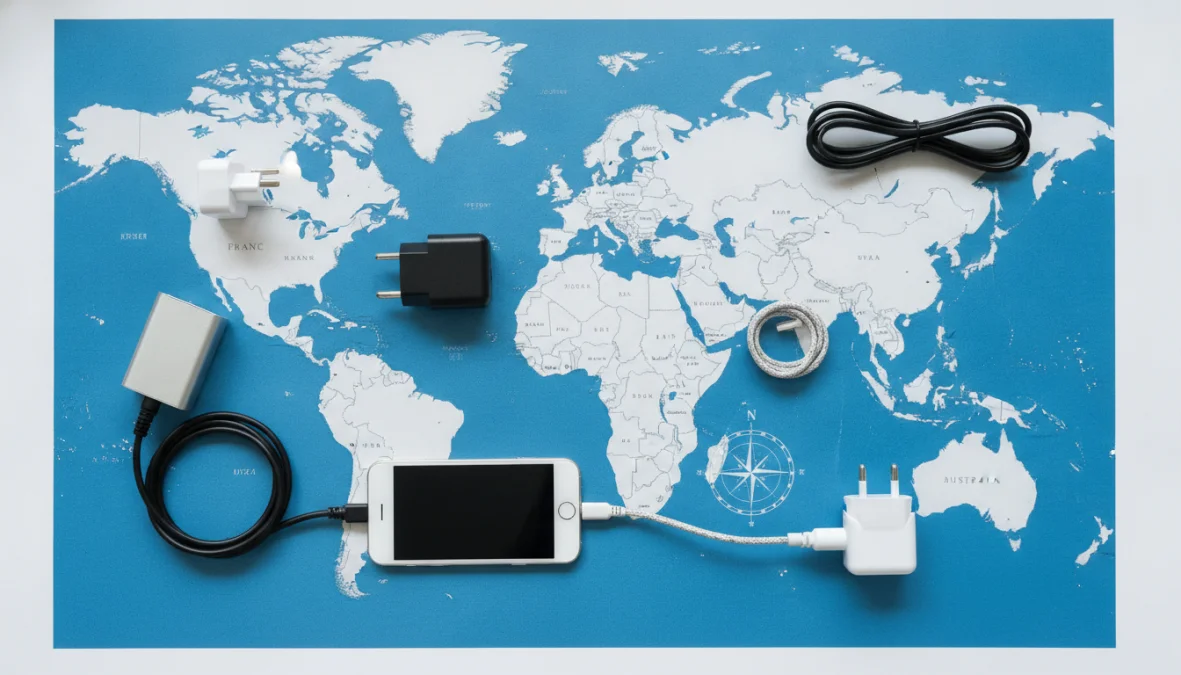
Ever arrived at your hotel room excited to charge your phone, only to realize your plug doesn’t fit the outlet? Or worse—plugged in your hair straightener and watched it spark and die? Yeah, we’ve all been there. Understanding power compatibility might not be the sexiest part of travel planning, but it’s definitely one that can save your gadgets (and your sanity). This travel adapter guide will walk you through everything you need to know about staying powered up wherever your adventures take you.
Understanding Travel Adapter Types and International Power Plugs
The world runs on electricity, but unfortunately, not the same kind. There are currently 15 different international power plug types, labeled A through N. Before you panic, the good news is that most travelers only need to worry about a handful of these travel adapter types.
Type A and B are standard in North America, Central America, and parts of South America and Asia (including the USA, Canada, Mexico, and Japan). Type C, the two-round-pin plug, dominates most of Europe, with variations like Type E (France) and Type F (Germany) adding grounding pins. The UK, Ireland, and several former British colonies use Type G, that chunky three-rectangular-pin beast. Meanwhile, Australia, New Zealand, China, and Argentina use Type I with its angled flat pins.
Here’s the critical distinction many travelers miss: a travel power adapter simply changes the shape of your plug to fit worldwide electrical outlets. It’s a physical converter for the prongs, nothing more. It doesn’t change voltage or frequency. Think of it like a translator for plug shapes—your device still needs to speak the electrical language of the country you’re visiting.
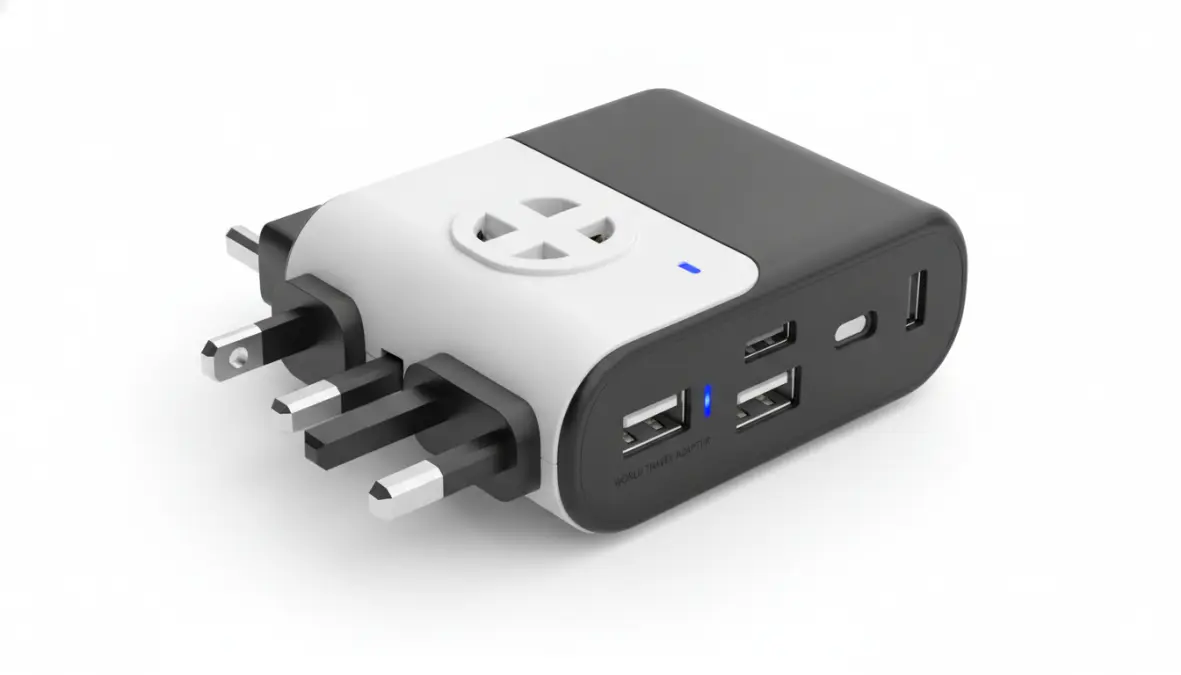
A universal travel adapter sounds perfect in theory—one device for all countries. The reality? They work well for casual travelers hitting multiple destinations, especially models with retractable prongs that adapt to different outlet configurations. However, they’re often bulkier than region-specific adapters, and cheaper models can have loose connections. For frequent travelers to specific regions, buying a dedicated adapter for that area often makes more sense. Just like organizing your luggage with the right packing system, choosing the right adapter setup can make your travels much smoother.
Voltage and Frequency Compatibility: What Travelers Need to Know
This is where things get serious. While adapters handle plug shapes, voltage is about the actual electrical power coursing through those outlets. Get this wrong, and you’ll fry your expensive electronics.
The world is split between two voltage camps: 110-120V (primarily USA, Canada, and some Caribbean and South American countries) and 220-240V (most of Europe, Asia, Africa, and Oceania). Understanding electrical voltage by country is crucial for protecting your devices.
Frequency matters too, though less commonly. Most countries use either 50Hz or 60Hz. For most travelers, this difference is negligible—your phone charger won’t care. However, devices with motors or timing mechanisms (like some alarm clocks or electric shavers) might run slightly faster or slower depending on the frequency.
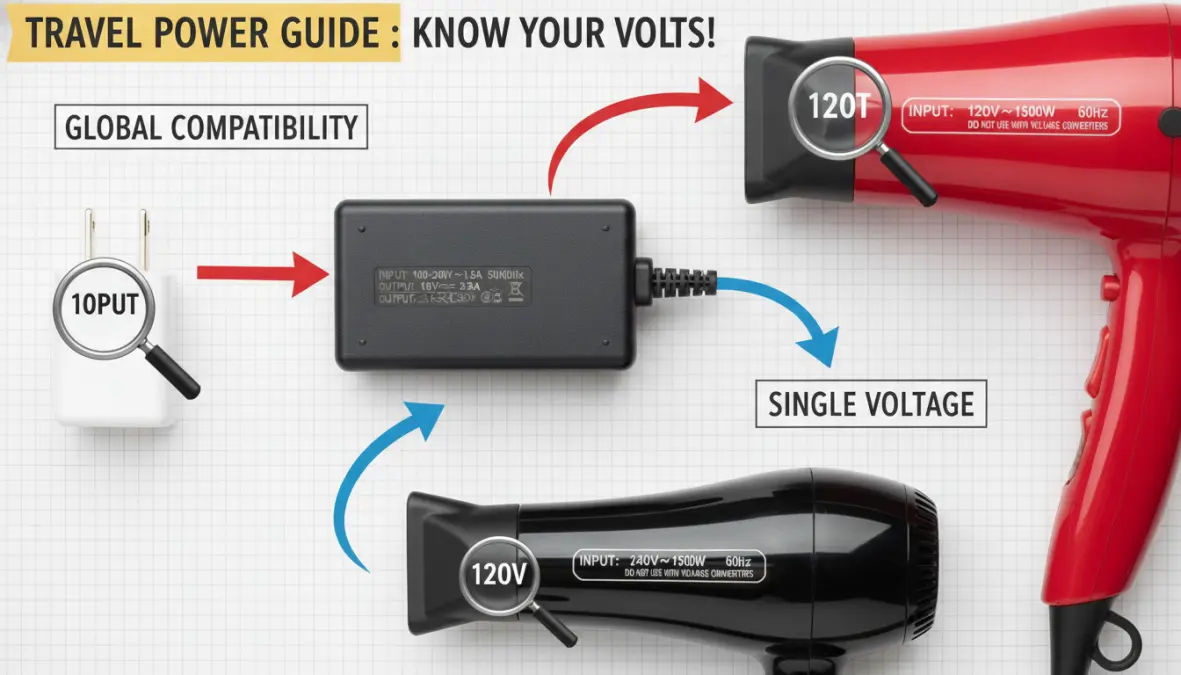
Check your device’s power label (usually on the plug or device itself). If it says “INPUT: 100-240V, 50/60Hz,” congratulations—you have a dual voltage appliance. Most modern electronics like laptops, phone chargers, cameras, and tablets are dual voltage by default. You only need an adapter, not a converter.
Single-voltage devices (typically showing only “120V” or only “230V”) are where you need a voltage converter guide. Common culprits include hair dryers, flat irons, curling irons, and some electric shavers. Using a 120V hair dryer in a 240V outlet without a converter will either blow the fuse or literally melt your device. The reverse (240V device in 120V outlet) means it simply won’t work properly—expect weak airflow or slow heating.
Here’s the pro tip: unless you’re staying somewhere for months, skip bringing single-voltage heat-producing appliances. Buy a cheap hair dryer at your destination, or look for hotels that provide them. Voltage converters that handle high-wattage devices are bulky, heavy, and often unreliable. For low-wattage electronics, a converter might work, but seriously consider if you really need that device abroad.
Choosing the Right Travel Adapter: Practical Recommendations
So how do you actually choose the right setup for your trip? Start with your destination. Going to Europe? You’ll need Type C (or E/F) adapters. Heading to the UK? Type G is your friend. Planning a Southeast Asia adventure? You might encounter Types A, C, and G depending on the country—this is where a universal travel adapter shines.
Modern travelers should prioritize adapters with built-in USB ports. Many excellent models now include 2-4 USB-A ports plus USB-C ports, eliminating the need to pack multiple charging bricks. This is especially valuable when outlet space is limited—something you’ll definitely encounter in older hotels across Europe and Asia. Some premium models even include surge protection travel features, protecting your gadgets from voltage spikes common in countries with unstable electrical grids.
For business travelers or digital nomads, invest in a quality all-in-one universal travel adapter with multiple USB ports and proper certifications (look for CE, FCC, and RoHS marks). Brands matter here—cheap knockoffs can overheat or fail when you need them most. Casual travelers can get away with simpler, region-specific adapters that cost less and take up minimal space.
Here’s a quick reference for popular destinations:
- Europe (France, Germany, Italy, Spain): Type C/E/F, 220-240V
- UK, Ireland, Malta: Type G, 220-240V
- USA, Canada, Mexico: Type A/B, 110-120V
- China, Australia, New Zealand: Type I, 220-240V
- India, South Africa: Type D/M, 220-240V
- Japan: Type A/B, 100V (lowest worldwide!)
- Brazil: Type N (and sometimes A/C), 127/220V (varies by region!)
Don’t forget about power banks! They’re lifesavers for long travel days, but airlines have strict regulations. Most allow power banks up to 100Wh (around 27,000mAh) in carry-on luggage only—never in checked bags. Just like being aware of common travel scams, knowing these regulations prevents headaches at security.
FAQ
Do I need a voltage converter or just an adapter?
For most modern electronics (phones, laptops, cameras, tablets), you only need an adapter. Check the power label on your device—if it says “INPUT: 100-240V,” you’re good to go anywhere with just an adapter. You only need a voltage converter for single-voltage devices, typically high-wattage appliances like hair dryers or straighteners not designed for international use.
What is the difference between a travel adapter and a converter?
A travel adapter changes the physical shape of your plug to fit foreign outlets. A voltage converter (or transformer) actually changes the electrical voltage from 110V to 220V or vice versa. Think of an adapter as changing languages and a converter as changing currency—completely different functions.
Can I use a universal adapter for all countries?
Yes, quality universal adapters work in most countries worldwide, covering Types A through I. However, they’re typically bulkier than single-region adapters and won’t convert voltage—they only change plug shapes. Make sure any universal adapter you buy covers your specific destinations.
Will my phone charger work internationally?
Almost certainly yes. Nearly all smartphone chargers manufactured in the past decade are dual voltage (100-240V) and will work worldwide with just a plug adapter. Check the fine print on your charger to confirm, but you shouldn’t need anything beyond a simple adapter for power compatibility.
How do I know if my device is dual voltage?
Look at the power label on the device itself or on its power adapter. If you see “INPUT: 100-240V” or any voltage range spanning both 110V and 220V, it’s dual voltage. Single-voltage devices show only one voltage like “120V” or “230V.” When in doubt, check the manufacturer’s website or user manual.
Getting your power situation sorted before you travel is one of those small preparations that makes a massive difference. Whether you’re exploring Morocco’s blue streets, island-hopping from Athens to Santorini, or trekking to Machu Picchu, staying charged means staying connected, safe, and able to capture every moment. Invest in the right adapter, double-check your device voltage, and you’ll never have to worry about power problems abroad again.