
Overland Travel Routes: Complete Guide to Epic Cross-Continental Journeys
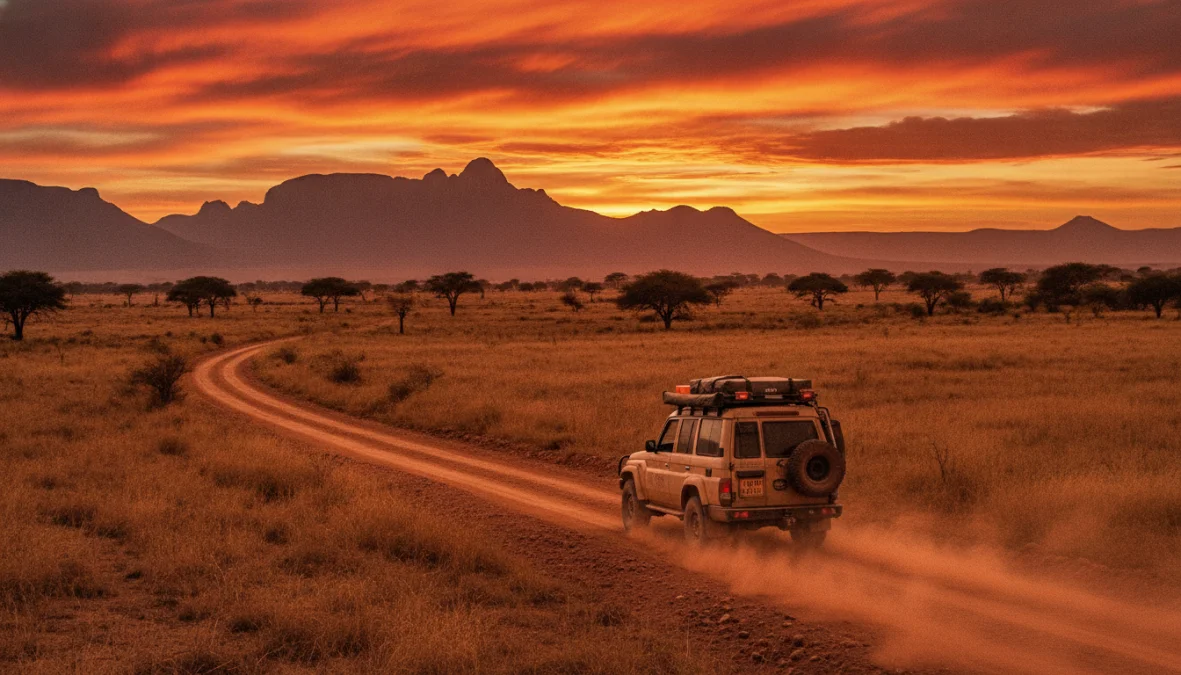
Picture this: you’re behind the wheel of a dusty 4×4, crossing borders without airport security lines, watching landscapes transform from desert to jungle over days instead of hours. Or maybe you’re on a motorcycle, navigating ancient trade routes that connect continents. This is the essence of overland travel—a journey where the route itself becomes the destination, and every mile tells a story. If you’ve ever dreamed of crossing continents on your own terms, exploring overland travel routes might just be your next great adventure.
What is Overland Travel and Why Choose These Epic Routes
Overland travel is essentially the art of journeying across land borders, typically covering vast distances through multiple countries or even entire continents. Unlike traditional vacations where you fly between destinations, overland travel routes connect the dots on the ground, letting you experience every transition, every cultural shift, and every landscape change along the way.
What sets these cross-continental journeys apart? For starters, there’s unmatched cultural immersion. You’re not just visiting countries—you’re crossing through them, stopping in small villages that never see tourists, sharing meals with locals, and understanding how cultures blend at borders. The flexibility is incredible too; if you discover an amazing spot, you can stay longer. No rigid flight schedules to stress about.
Cost-wise, overland travel can be surprisingly affordable. While the upfront investment in a vehicle might seem steep, daily expenses often run lower than flying and hotel-hopping. Plus, there’s the sustainability angle—your carbon footprint shrinks considerably compared to multiple flights.
Transportation options vary widely: serious adventurers might choose a modified 4×4 truck, motorcyclists prefer the freedom of two wheels, budget travelers combine buses and trains, and the truly hardcore opt for bicycles. Each method offers its own rhythm and connection to the landscape. Before you dive into planning, organizing your gear properly is crucial—check out this complete packing cubes guide to master your travel organization system.
Most Popular Overland Travel Routes Across the World
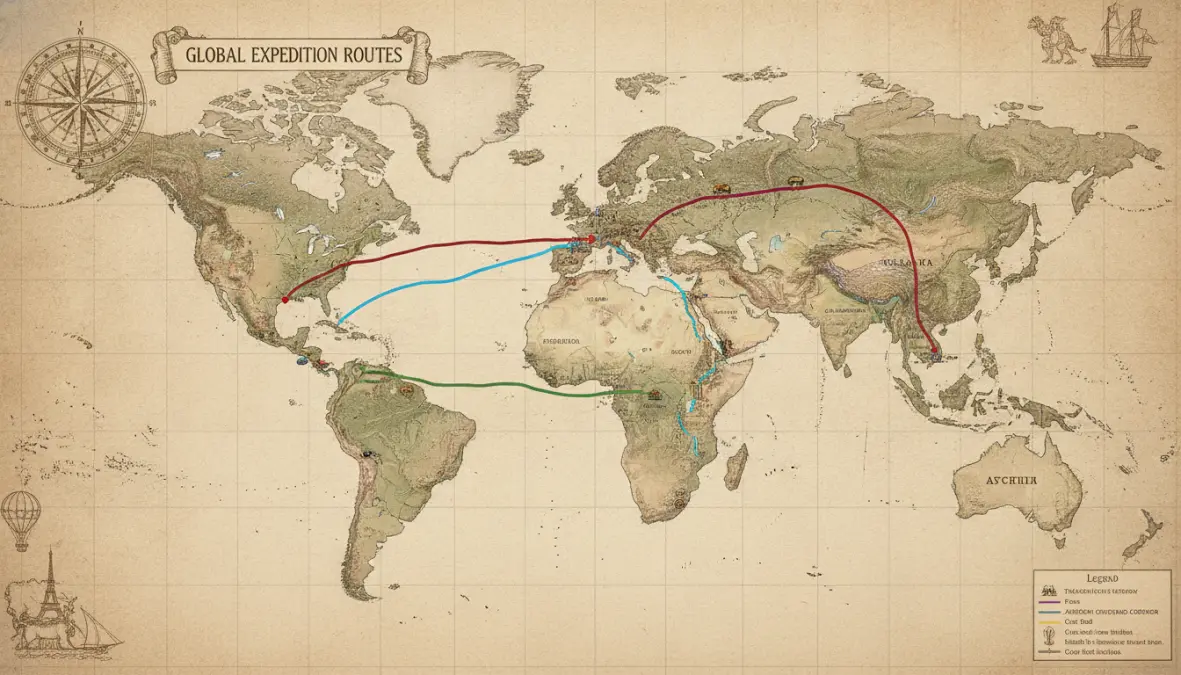
The world’s most iconic overland travel routes have been tested by thousands of adventurers. Here are the legendary journeys that top every overlander’s bucket list:
The Panamericana (Alaska to Argentina) spans approximately 30,000 kilometers through 14 countries. This epic journey typically takes 12-18 months and ranges from moderate to challenging difficulty. Highlights include:
- Arctic landscapes of Alaska and Canada
- Ancient Mayan ruins in Mexico and Guatemala
- Costa Rica’s biodiversity hotspots
- Patagonian wilderness at journey’s end
Note that the Darién Gap between Panama and Colombia remains impassable by vehicle, requiring shipping arrangements. If you’re tackling the Peru section, don’t miss Machu Picchu and be prepared for altitude challenges.
The Trans-Siberian Route covers roughly 9,300 kilometers from Moscow to Vladivostok, taking 3-6 months by vehicle (or 7 days by train for those seeking comfort). This moderate-difficulty route showcases Lake Baikal’s pristine waters, Mongolia’s endless steppes, and the vastness of Siberian taiga.
Australia Coast-to-Coast stretches about 4,000 kilometers from Perth to Sydney, requiring 3-8 weeks depending on detours. The Nullarbor Plain’s isolation, Great Ocean Road’s coastal drama, and Outback’s red center make this a moderate yet memorable journey.
Southeast Asia Loop is perfect for beginners, covering 5,000-10,000 kilometers through Thailand, Laos, Vietnam, and Cambodia over 2-6 months. Ancient temples, vibrant cities, and incredible street food await at budget-friendly prices.
Classic African Overland Routes
The legendary Cairo to Cape Town route spans approximately 12,000 kilometers through 10+ countries, typically taking 3-6 months to complete. This challenging journey represents the quintessential African overland experience, though two main corridors exist.
The East Africa route passes through Egypt, Sudan, Ethiopia, Kenya, Tanzania, Malawi, Zambia, Zimbabwe, Botswana, and South Africa. This corridor offers incredible safari opportunities in the Serengeti and Okavango Delta, plus easier border crossings in most sections. The West Africa alternative goes through Morocco, Mauritania, Senegal, and down the coast—more remote and adventurous but logistically trickier.
Border crossings require patience and proper documentation; the Egypt-Sudan border and Ethiopia-Kenya crossing are particularly notorious for bureaucracy. Seasonality matters enormously—avoid rainy seasons (November-April in East Africa) when roads become impassable quagmires. Once you reach your final destination, explore Cape Town on a budget to celebrate your achievement.
Asian Overland Corridors
The modern Silk Road follows ancient trade routes from Turkey through Iran, Central Asian republics (Uzbekistan, Turkmenistan, Kyrgyzstan), and into western China. This 10,000+ kilometer journey takes 4-8 months and showcases architectural wonders like Samarkand’s mosques and the diversity of Central Asian cultures.
Visa considerations are complex here—Iran and Turkmenistan require advance planning, while some Central Asian countries offer visa-free entry for certain nationalities. Security concerns fluctuate; research current situations in border regions carefully. The best travel window runs April-June and September-October, avoiding brutal summer heat and harsh winter conditions.
India’s overland routes from north to south cover incredible diversity, though navigating traffic and bureaucracy tests patience. Morocco’s proximity makes Chefchaouen a great starting point for those considering Asian routes later.
Essential Planning Tips for Your Overland Journey
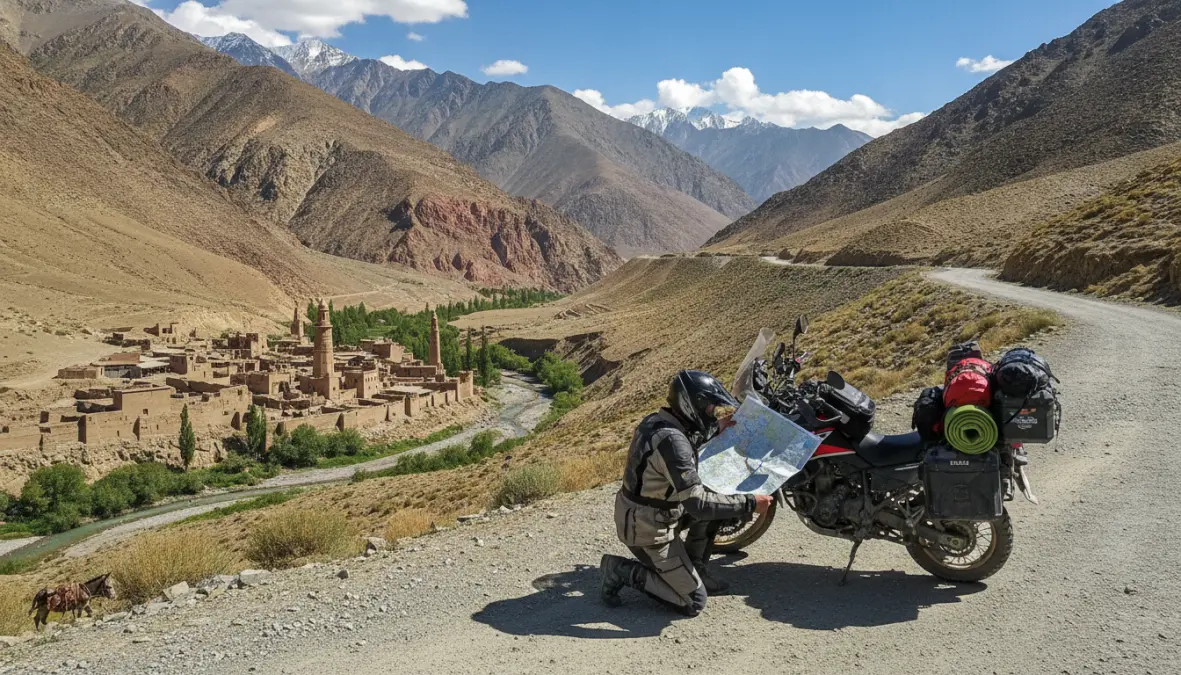
Choosing your transportation is the first major decision. A 4×4 vehicle offers comfort and storage but costs $15,000-50,000 upfront. Motorcycles provide freedom and lower costs ($5,000-15,000) but limited cargo space. Public transport keeps budgets minimal ($20-50 daily) but sacrifices flexibility. Your choice depends on route difficulty, budget, and desired comfort level.
Budget expectations vary dramatically by region. Southeast Asia runs $30-50 daily including accommodation and food. Africa averages $50-80 daily with vehicle costs. South America sits around $40-70 daily. Europe and developed countries push $70-150 daily. These figures assume self-catering and camping or basic lodging.
Documentation requirements deserve serious attention months before departure. Visas for multiple countries take time—some require invitations or pre-approval. A Carnet de Passage acts as a temporary vehicle import permit for Africa and Asia, costing $500-3,000 depending on your vehicle’s value. Comprehensive vehicle insurance covering all transit countries is non-negotiable, and many overlanders carry both local and international policies.
Essential equipment includes recovery gear (hi-lift jack, sand ladders, tow straps), spare parts specific to your vehicle, water purification systems, camping gear, communication devices (satellite phone for remote areas), and thorough first aid supplies. Don’t forget the power of staying organized—proper packing systems prevent chaos.
Health preparation means consulting travel clinics 3-4 months before departure for necessary vaccinations (yellow fever, typhoid, hepatitis, rabies depending on regions). Malaria prophylaxis matters in tropical zones. Carry comprehensive medical insurance covering evacuation—overland routes often traverse areas far from quality medical facilities. Be aware of common travel scams that target overlanders at borders and tourist sites.
For connectivity, global SIM cards and local SIMs in each country keep you online. Offline mapping apps like Maps.me or Gaia GPS are lifesavers. Join online communities like Horizons Unlimited, iOverlander, and Expedition Portal for real-time advice and route updates from fellow travelers.
FAQ
How long does an overland journey take?
Duration varies dramatically by route and pace. A Southeast Asia loop might take 2-3 months, while Cairo to Cape Town typically requires 3-6 months. The full Panamericana often spans 12-18 months. Your travel style, budget, and how often you linger in favorite spots determine actual timeframes more than distance alone.
What is the cheapest overland route?
Southeast Asia consistently ranks as the most budget-friendly overland route, with daily costs around $30-50 including food, accommodation, and local transport. India offers similar affordability. These regions feature excellent public transportation, cheap accommodation, and inexpensive food, making extended travel accessible even on tight budgets.
Do I need a 4×4 for overland travel?
Not always. Southeast Asia and most South American routes work fine with regular vehicles or public transport. However, African routes, Central Asian tracks, and remote Australian Outback sections absolutely require 4×4 capability. Assess your specific route’s road conditions before committing to vehicle type and modifications.
Is overland travel safe?
Generally yes, with proper preparation and awareness. Thousands complete major routes annually without serious incidents. Research current security situations in transit countries, avoid conflict zones, secure vehicles properly when parked, and trust local advice. Most dangers stem from traffic accidents rather than crime—defensive driving matters more than worrying about bandits.
The world’s greatest overland travel routes offer something no flight can match: the profound transformation that happens when you measure journeys in weeks instead of hours, in landscapes gradually shifting rather than suddenly changing. Whether you’re dreaming of African sunsets from your rooftop tent or navigating ancient Silk Road cities, the planning starts now. Your cross-continental adventure awaits—will you take the road less flown?