Travel First Aid Kit: Complete Packing List and Medical Essentials Guide
Picture this: you’re hiking through the stunning trails of Morocco’s mountain villages when suddenly, you twist your ankle. Or maybe you’re enjoying the beaches along Portugal’s Algarve Coast and develop a nasty blister. These aren’t worst-case scenarios—they’re common travel mishaps that happen to even the most prepared adventurers. The difference between a minor inconvenience and a trip-ruining disaster? Having a well-stocked travel first aid kit within arm’s reach. Whether you’re planning a weekend city break or a month-long backpacking adventure, your medical essentials deserve as much attention as your passport and phone charger.
What to Pack in Your Travel First Aid Kit: Complete Checklist
Building your travel first aid kit isn’t about cramming every medical supply into your bag—it’s about strategic packing that addresses the most common health issues travelers face. A basic kit suitable for short trips to developed countries differs significantly from a comprehensive kit needed for remote adventures or extended international travel.
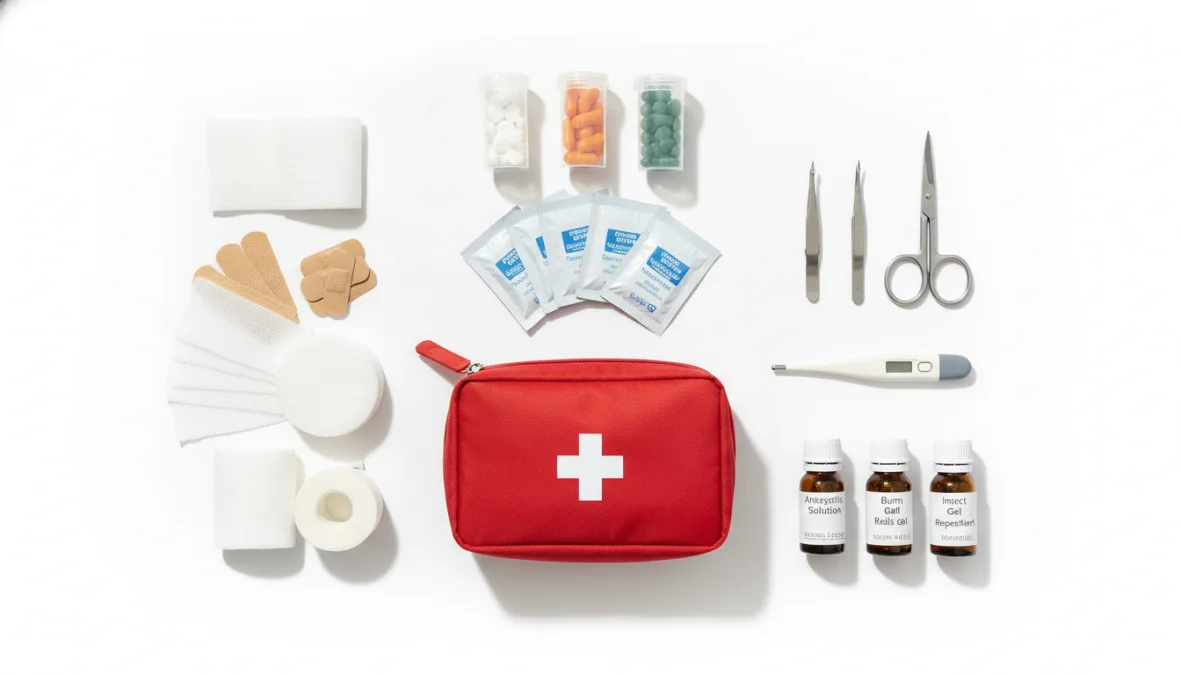
Think of your travel first aid kit as having four essential categories: medications, wound care supplies, tools and instruments, and personal health items. Each category serves a distinct purpose, and together they create a safety net that lets you handle everything from headaches to hiking injuries.
The beauty of organizing your medical essentials this way is that you can scale up or down based on your specific journey. A weekend trip to an urban destination might only require a compact kit with basics, while trekking in remote areas demands a more robust collection of supplies. Just like using packing cubes to organize your clothes, categorizing your medical supplies makes everything easier to find during stressful moments.
Essential Medications and Prescription Items
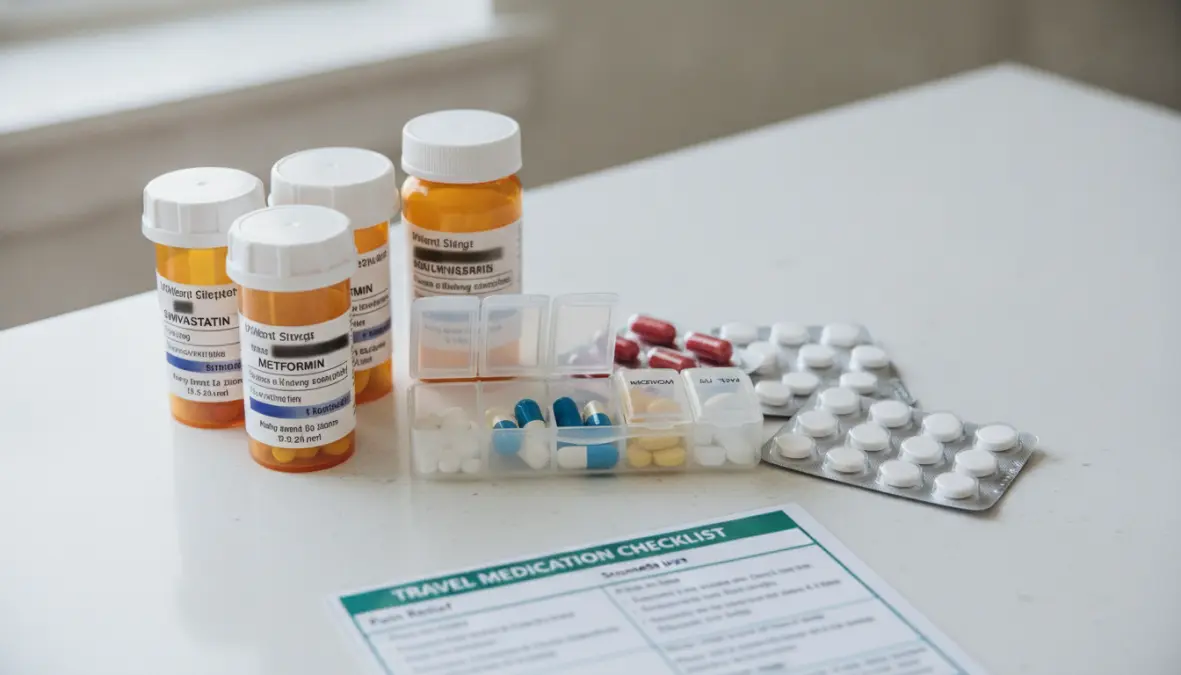
Your medication arsenal should cover the most frequent travel health complaints. Pack pain relievers like ibuprofen and acetaminophen for headaches, muscle aches, and fever. Antihistamines are crucial for unexpected allergic reactions or helping you sleep on long flights. Anti-diarrheal medication and oral rehydration salts can literally save your vacation when traveler’s tummy strikes.
Don’t forget prescription medications—always bring more than you need, stored in original containers with labels intact. If you’re heading to high-altitude destinations, consider medications for altitude sickness (learn more about this in our complete altitude sickness guide). For tropical regions, consult your doctor about malaria prophylaxis weeks before departure.
Pack a small notebook with medication names, dosages, and your doctor’s contact information. This becomes invaluable if you need medical attention abroad or need to explain your prescriptions to customs officials.
Wound Care and Emergency Supplies
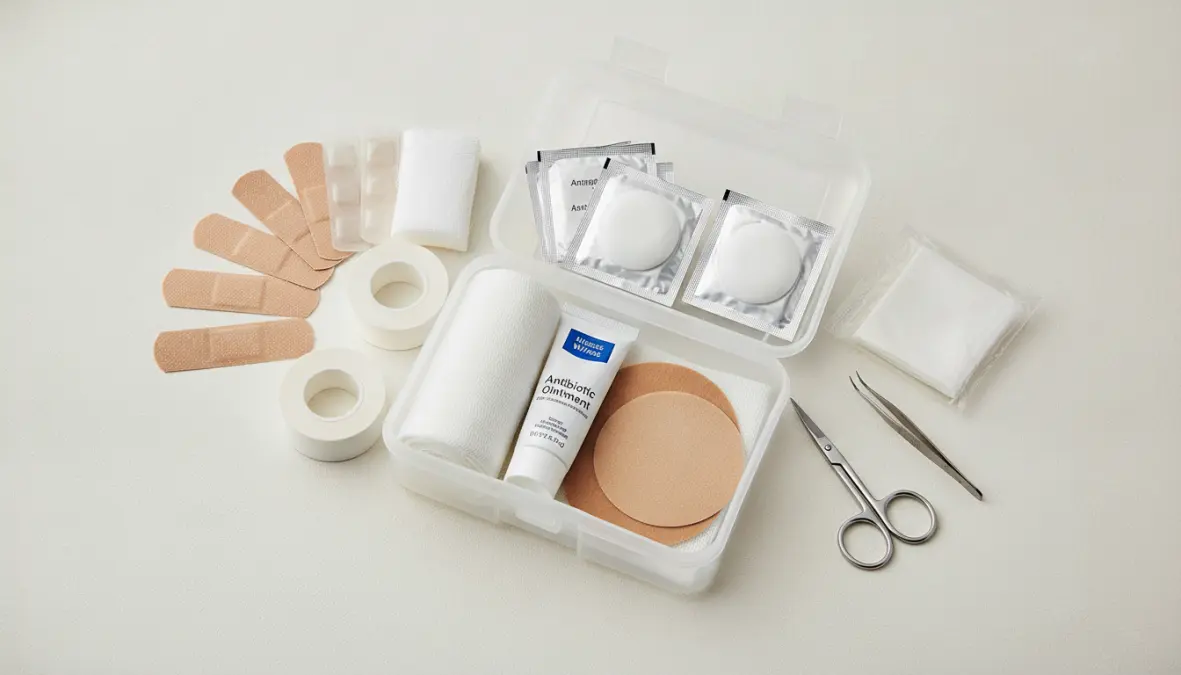
Cuts, scrapes, and blisters are practically inevitable when you’re exploring new places. Your wound care collection should include various bandage sizes, from small adhesive strips for minor cuts to larger sterile gauze pads for more significant wounds. Medical tape, antiseptic wipes, and antibiotic ointment complete your infection-prevention toolkit.
Blister treatment deserves special attention—moleskin or specialized blister bandages can mean the difference between enjoying your walking tour and limping back to your hotel. Include tweezers for splinter removal, small scissors for cutting tape and gauze, and a digital thermometer to monitor fevers. Disposable gloves protect you when treating wounds, while elastic bandages help with sprains and strains.
For adventure travelers, consider adding butterfly closures for deeper cuts and instant cold packs for injuries. These items take minimal space but provide maximum peace of mind when you’re far from medical facilities.
Choosing the Right Travel First Aid Kit for Your Destination
Not all trips require the same level of medical preparedness. Your travel first aid kit should adapt to your destination, activities, and health profile just as your wardrobe changes for different climates.
Adventure travelers heading for activities like hiking, diving, or mountain climbing need expanded kits with supplies for treating sprains, altitude sickness, and environmental injuries. Beach destinations call for extra sunburn treatment, jellyfish sting relief, and waterproof bandages. Urban travelers can usually pack lighter since pharmacies are readily accessible, though you’ll still want basics for convenience and emergencies outside business hours.
Geographic considerations matter tremendously. Tropical destinations require insect repellent with DEET, anti-malarial medications, and extra rehydration supplies. Remote locations demand comprehensive kits since restocking might be impossible. When traveling to developed countries like during a Norwegian fjords adventure, you can rely more on local healthcare infrastructure while still maintaining essentials.
Pre-existing conditions require careful planning. Diabetics need extra testing supplies and insulin storage solutions. Those with severe allergies should carry epinephrine auto-injectors and comprehensive antihistamines. Always research your destination’s medical facilities beforehand—knowing where hospitals are located provides valuable context for what you should carry.
Regarding pre-assembled versus DIY kits: commercial travel first aid kits offer convenience and often come in TSA-compliant sizes, but they may include items you don’t need while missing essentials for your specific situation. Building your own kit costs more initially but ensures everything matches your requirements perfectly.
For air travel, familiarize yourself with TSA regulations. Liquids follow the 3.4-ounce rule unless they’re medically necessary—keep prescriptions labeled and carry a doctor’s note for injectable medications. Sharp objects like scissors must have blades shorter than 4 inches in carry-on bags, though most travelers prefer placing comprehensive first aid kits in checked luggage while keeping a mini version accessible during flights.
FAQ: Travel First Aid Kit Questions
What should be in a travel first aid kit?
At minimum, include pain relievers, antihistamines, anti-diarrheal medication, various bandages, antiseptic wipes, antibiotic ointment, tweezers, medical tape, and any personal prescription medications. Expand this based on destination and activities.
Can you bring a first aid kit on a plane?
Yes, both in carry-on and checked luggage. However, liquids over 3.4 ounces must go in checked bags unless medically necessary with proper documentation. Sharp items like scissors should have blades under 4 inches for carry-on.
How do you pack medications for international travel?
Keep medications in original labeled containers with your name and dosage information. Bring more than needed in case of delays. Carry a copy of prescriptions and a doctor’s letter explaining necessary medications, especially for controlled substances.
What is the difference between a travel first aid kit and a regular one?
Travel kits prioritize compact size, lightweight design, and TSA compliance while focusing on common travel ailments like diarrhea, jet lag, and blisters. Home kits can be larger and address household emergencies that rarely occur while traveling.
Do I need a first aid kit for carry-on?
It’s smart to keep basic supplies in your carry-on—pain relievers, any essential prescriptions, motion sickness medication, and a few bandages. This ensures you have access during long flights and prevents disaster if checked luggage gets lost.
Where should I buy a travel first aid kit?
Outdoor retailers, pharmacies, and online marketplaces offer pre-assembled kits. Alternatively, purchase a compact organizer and build your own from pharmacy supplies, which often proves more cost-effective and personalized to your needs.
Your travel first aid kit represents more than just medical supplies—it’s your insurance policy against the unpredictable nature of adventure. Whether you’re navigating common tourist traps or exploring off-the-beaten-path destinations like Cape Town, having the right medical essentials lets you focus on creating memories instead of worrying about what-ifs. Take an hour before your next trip to assemble or update your kit—your future self will thank you when minor mishaps stay minor.