
How to Beat Jet Lag: Science-Based Recovery Guide for Travelers
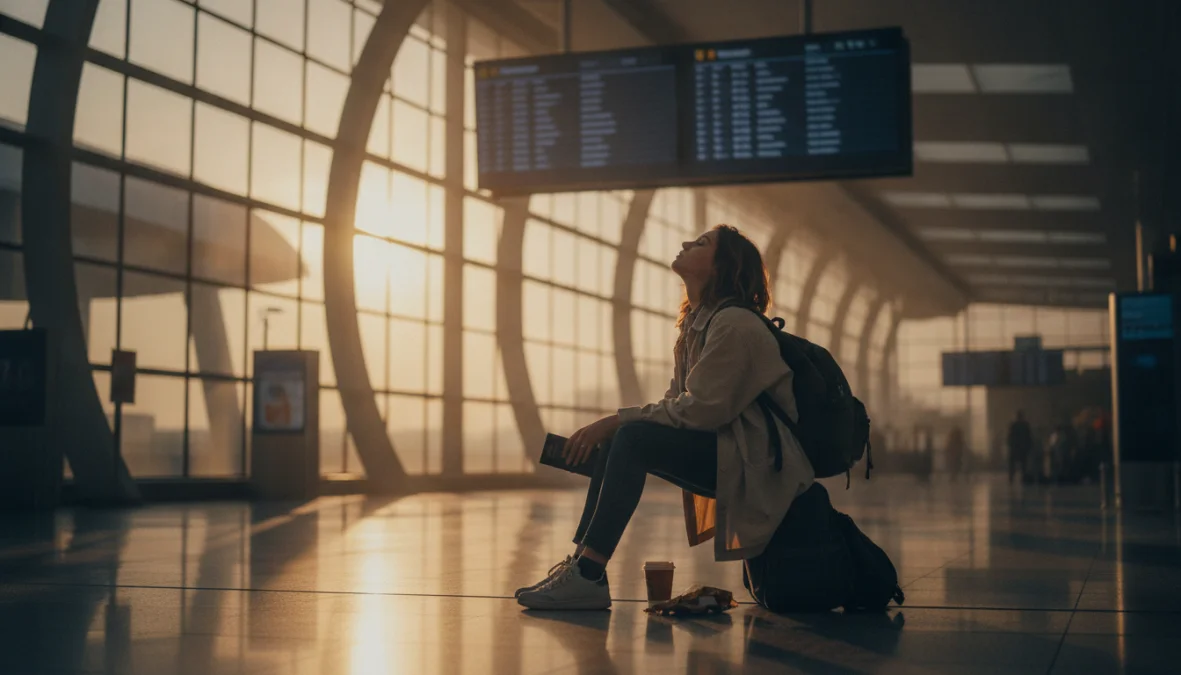
You’ve just landed after a 12-hour flight halfway across the world. Your body insists it’s 3 AM, but the blazing sun outside says otherwise. Your eyes feel like sandpaper, your brain’s wrapped in fog, and the thought of exploring your dream destination feels overwhelming. Sound familiar? You’re experiencing jet lag, and trust me, you’re not alone. The good news? Understanding how to beat jet lag doesn’t require superhuman willpower—just some smart, science-backed strategies that actually work.
Understanding Jet Lag: What It Is and Why It Happens
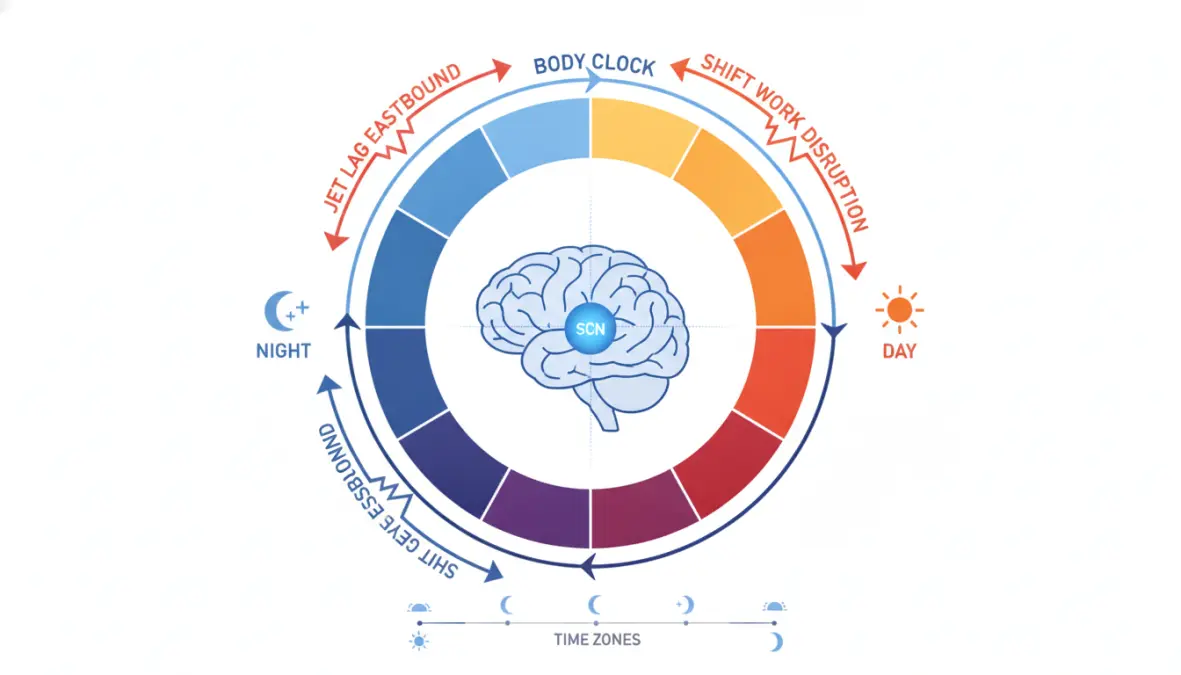
Jet lag isn’t just feeling tired after a long flight—it’s a temporary sleep disorder that occurs when your internal circadian rhythm gets out of sync with the external environment. Your body clock, regulated by a cluster of neurons in your hypothalamus, operates on roughly a 24-hour cycle that controls sleep-wake patterns, hormone release, body temperature, and digestion.
When you rapidly cross multiple time zones, your biological clock remains stuck in your departure time zone while your new environment demands different wake and sleep times. This mismatch creates the constellation of jet lag symptoms travelers dread: persistent fatigue, insomnia at night combined with daytime sleepiness, digestive issues, mood swings, difficulty concentrating, and even weakened immunity.
Here’s where it gets interesting: not all flights create equal misery. Eastward travel vs westward travel produces dramatically different effects. Flying east (like New York to Paris) is generally harder on your body than flying west. Why? Your circadian rhythm naturally runs slightly longer than 24 hours, making it easier to delay sleep (going west) than to advance it (going east). Studies show it takes approximately one day per time zone crossed to fully adjust, though eastward journeys may require even longer.
Certain travelers are more susceptible to severe jet lag: older adults (whose circadian rhythms are less flexible), people who don’t exercise regularly, those crossing more than three time zones, and individuals with pre-existing sleep disorders. Understanding these fundamentals of time zone adjustment is your first step toward effective prevention and recovery.
Science-Backed Strategies to Beat Jet Lag
Now let’s get to the practical stuff—the proven jet lag remedies that can transform your post-flight experience from zombie mode to productive explorer. These aren’t old wives’ tales; they’re evidence-based methods to overcome jet lag faster.
Before Your Flight: Prevention Tactics
The battle to prevent jet lag begins days before departure. Gradual sleep schedule adjustment is your most powerful weapon. If traveling east, shift your bedtime earlier by one hour per day for 3-4 days before departure. Going west? Do the opposite—stay up later progressively. This “pre-adaptation” gives your body a head start on the coming shift.
Strategic flight selection matters more than you think. When possible, choose flights that arrive in early evening local time, allowing you to stay awake a few hours before sleeping at a normal bedtime. For those wondering how to prevent jet lag before a flight, hydration preparation is crucial—begin increasing water intake 48 hours before departure while reducing alcohol and caffeine consumption at least 24 hours pre-flight. Both substances interfere with sleep quality and exacerbate dehydration during air travel.
During and After Your Flight: Recovery Methods
Once airborne, immediately set your watch to your destination time zone and begin following that schedule mentally. This psychological trick helps initiate your body clock reset. Strategic light exposure becomes your primary tool: if flying east, seek bright light in the morning at your destination and avoid it in the evening. Flying west? Do the reverse.
Light exposure therapy isn’t just sitting by a window—research shows that bright light (ideally 10,000 lux) directly suppresses melatonin production and shifts your circadian phase. Some frequent travelers invest in specialized light therapy devices for consistent results.
Here’s a powerful technique for how to recover from jet lag quickly: the 16-hour fast method. Stop eating 16 hours before breakfast time at your destination. Your body’s food-anticipation clock is separate from your light-dark cycle, and this fast can help reset it rapidly. When you finally eat breakfast at destination time, you’re signaling a new circadian schedule.
Melatonin supplementation has solid scientific backing for jet lag treatment. Take 0.5-5mg about 30 minutes before your target bedtime at your destination for 3-4 nights. Timing matters enormously—taking it at the wrong time can worsen jet lag. For the best way to beat jet lag when traveling east, combine evening melatonin with morning light exposure.
The napping question haunts every jet-lagged traveler. If you absolutely must nap upon arrival, limit it to 20-30 minutes before 3 PM local time. Longer naps or late-afternoon sleep will sabotage your nighttime sleep and prolong recovery. Strategic meal timing also helps—eat meals according to local time immediately, even if you’re not hungry.
For long-haul flight veterans, particularly those traveling full-time across continents, mastering these techniques becomes essential for maintaining productivity and enjoying destinations like Angkor Wat at sunrise or island-hopping in Greece without feeling like a sleep-deprived shell of yourself.
Common Jet Lag Questions Answered
How long does it take to recover from jet lag? The general rule is one day per time zone crossed, though individual variation exists. Eastward travel typically requires longer recovery—sometimes 1.5 days per zone. Crossing three or fewer zones might resolve in 2-3 days, while eight-plus zones could take over a week without intervention.
Does melatonin really work for jet lag? Yes, but with caveats. Multiple studies confirm melatonin’s effectiveness for jet lag cure when timed correctly. However, it’s most beneficial for eastward travel and crossing five or more time zones. Quality matters—choose pharmaceutical-grade supplements with verified dosing.
What’s the best jet lag remedy? There’s no single magic bullet, but light exposure combined with strategic sleep timing produces the fastest results. For natural remedies for jet lag recovery, prioritize sunlight exposure, exercise, hydration, and maintaining consistent meal times at your destination.
Why is eastward travel worse? Your circadian rhythm naturally runs slightly longer than 24 hours (about 24.2 hours average). This makes “phase delay” (staying up later when traveling west) easier than “phase advance” (going to bed earlier when traveling east). Essentially, you’re fighting against your biology’s natural tendency.
Do jet lag pills work? Beyond melatonin, evidence for commercial “jet lag pills” is mixed. Prescription medications like modafinil or short-acting sleep aids can help in specific scenarios, but they don’t address the underlying circadian disruption. Consult a physician before relying on pharmaceutical solutions.
Your Action Plan for Jet-Lag-Free Travel
Beating jet lag isn’t about suffering through it—it’s about working with your biology instead of against it. Start adjusting your schedule before you leave, manipulate light exposure strategically, time your meals and supplements correctly, and give your body the tools it needs to recalibrate. Whether you’re heading to Morocco’s blue city, Portugal’s Algarve coast, or Cape Town, these science-backed strategies will help you hit the ground running instead of crawling to your hotel bed.
The world’s too amazing to waste days recovering from travel fatigue and sleep deprivation. Pack smart with proper organization, implement these jet lag recovery tips, and make every moment of your trip count. Your well-rested future self will thank you.