Essaouira Morocco Guide: Your Complete Beach Town and Windsurfing Paradise
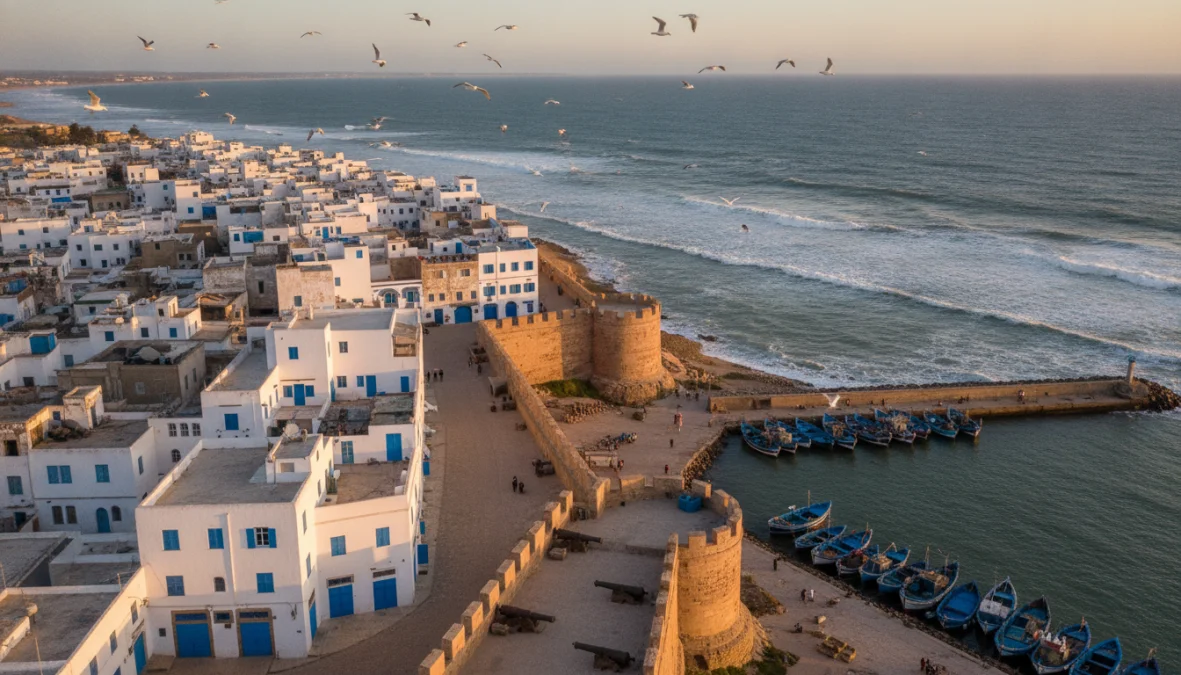
Picture this: whitewashed buildings with blue shutters catching the Atlantic breeze, the sound of waves mixing with Arabic guitar melodies, and the scent of grilled sardines wafting from the harbor. Welcome to Essaouira, Morocco’s most charming coastal escape. This essaouira morocco guide will show you why this windswept port city deserves more than just a quick day trip from Marrakech. Whether you’re a windsurfing enthusiast, a culture vulture, or simply someone seeking a relaxed alternative to Morocco’s busier imperial cities, visiting Essaouira offers an unforgettable blend of history, beach life, and authentic Moroccan coastal charm.
Why Essaouira Should Be on Your Morocco Itinerary
Nestled on Morocco’s Atlantic coast, Essaouira (formerly known as Mogador) sits about 180 kilometers west of Marrakech. Unlike the frenetic energy of Marrakech or the overwhelming souks of Fez, this Moroccan coastal town moves at a different pace. The constant ocean breeze keeps temperatures comfortable year-round, and the laid-back vibe attracts artists, surfers, and travelers seeking authentic experiences without the tourist hustle.
The city’s unique character comes from its fascinating history as a Portuguese trading post in the 16th century, which left behind distinctive European-style fortifications mixed with Berber and Arab influences. If you’re wondering how to get to Essaouira from Marrakech, the journey takes roughly 2.5 to 3 hours by bus or private transfer along a scenic route through argan tree forests. Companies like Supratours run regular daily services for around $10-15.
When it comes to the best time to visit Essaouira Morocco, most travelers prefer April through October when the weather is warmest. However, wind conditions peak from April to September, making this ideal for water sports enthusiasts. If you’re more interested in cultural experiences, June brings the famous Gnaoua Music Festival, transforming the medina into a vibrant celebration of spiritual music that attracts performers and visitors from around the world. Similar to planning your itinerary for Morocco’s Blue City Chefchaouen, timing your visit around festivals can enhance your experience significantly.
Exploring Essaouira: From Ancient Medina to Windswept Beaches
The beauty of this essaouira travel guide is that most things to do in Essaouira are concentrated in a walkable area between the medina and the beach, making it perfect for a relaxed exploration pace.
Wandering the UNESCO-Listed Medina
The Essaouira medina earned its UNESCO World Heritage status thanks to its remarkably preserved 18th-century Portuguese fortifications. Unlike the labyrinthine medinas elsewhere in Morocco, Essaouira’s follows a logical grid pattern, making it virtually impossible to get truly lost—a refreshing change for many travelers.
Start your exploration at the Skala de la Ville, the impressive sea-facing ramparts where rows of bronze cannons still point toward the Atlantic. This spot offers stunning ocean views and has appeared in numerous films and TV shows. The iconic blue doors and shutters throughout the medina create countless Instagram-worthy moments, but they’re more than just photogenic—they represent the Portuguese influence that still defines the city’s aesthetic.
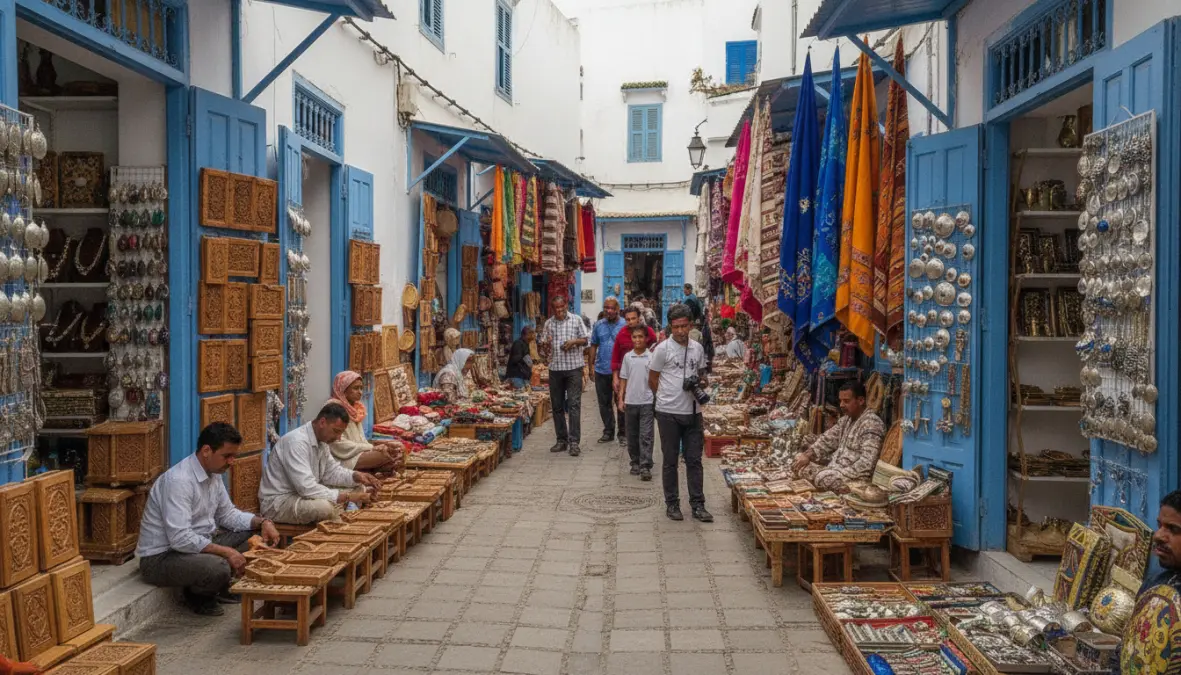
The medina’s souks are refreshingly low-pressure compared to Marrakech. Artisans here specialize in thuya wood crafts, creating everything from intricate jewelry boxes to chess sets from this aromatic local wood. You’ll also find excellent silver jewelry, traditional carpets, and contemporary art galleries showcasing both local and international artists. Place Moulay Hassan, the main square, serves as the medina’s living room where locals and visitors alike gather at cafés to watch street musicians and the world go by.
Don’t miss the working fishing port, where blue boats bob in the harbor and seagulls swoop dramatically overhead. The morning fish auction is a spectacle of organized chaos, and the area offers the freshest seafood restaurants in town—more on that later.
Essaouira’s Beach Scene and Coastal Activities
Essaouira beach stretches for kilometers south of the medina, offering a wide expanse of golden sand that never feels crowded, even in peak season. The constant wind that makes this coast perfect for water sports also means you’ll want a windbreaker for beach walks, but it keeps temperatures comfortable even in summer.
The main beach right by the medina is perfect for sunset strolls, camel rides (a popular activity despite the beach setting), and watching the windsurfers and kitesurfers in action. Offshore, you can spot the Iles Purpuraires (Purple Islands), historically important for the production of purple dye from shellfish. Several beach clubs offer loungers and refreshments if you want a more relaxed beach day.
For a different vibe, head south to Diabat beach, about 3 kilometers away. This quieter stretch offers even better conditions for long walks and is home to the ruins of the Borj El Baroud fortress. The area around Diabat is perfect for an essaouira day trip from Marrakech extension if you have time. When considering essaouira beach activities and water sports, you’ll find options ranging from horseback riding along the shore to quad biking in the dunes behind the beach.
Essaouira Windsurfing and Water Sports: Africa’s Wind Capital
If you’re passionate about wind-powered water sports, this is where Essaouira truly shines. The city has earned its reputation as Africa’s premier destination for essaouira windsurfing and kitesurfing Morocco, thanks to consistent trade winds that blow from April through September, with June through August offering the strongest conditions.
The main beach offers decent conditions for beginners, but the best windsurfing spots in Essaouira are actually found at Sidi Kaouki, about 20 kilometers south of the city. This beach town has become a mecca for serious riders, with consistent wind, powerful waves, and a growing community of surf schools and camps. Moulay Bouzerktoun, even further south, attracts advanced riders looking for challenging conditions.
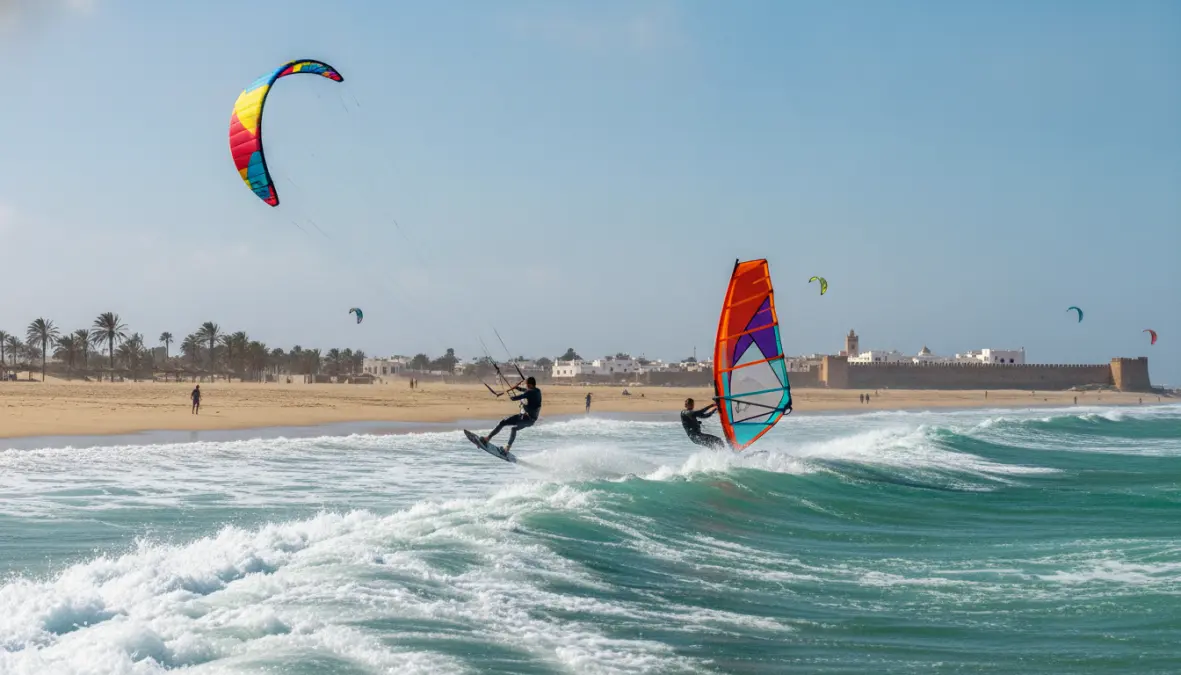
For beginners, numerous schools in Essaouira offer lessons starting around €30-40 for a 2-hour session, including equipment. Established schools like Ocean Vagabond, Explora, and Magic Fun Africa cater to all levels, with multilingual instructors and modern equipment. A week-long beginner package typically costs €250-350, while equipment rental for experienced riders runs about €50-70 per day depending on the gear.
When the wind drops (typically in winter months), the waves pick up, making this a surprisingly good surf destination as well. Several schools offer surf lessons for around €25-30 per session. If you’re planning what to do in Essaouira for 3 days, dedicating at least one full day to trying windsurfing or kitesurfing is highly recommended—it’s an integral part of the Essaouira experience. Just as Portugal’s Algarve Coast attracts water sports enthusiasts, Essaouira has carved out its own niche as Morocco’s water sports capital.
Where to Stay and Practical Tips for Your Essaouira Visit
When considering where to stay in Essaouira, you’ll choose between traditional riads within the medina or modern hotels along the beach. Essaouira hotels range from budget-friendly guesthouses (€20-30/night) to luxurious riads (€100-200+/night). Medina riads offer authentic Moroccan architecture with rooftop terraces perfect for sunset views, while beachfront hotels provide direct ocean access and often include pools and spas.
For atmosphere and proximity to restaurants and nightlife, stay in the medina near Place Moulay Hassan. Budget travelers love Hostel Essaouira and Smiley’s Hostel (€10-15/dorm), while mid-range options like Riad Chbanate and Madada Mogador (€60-90) offer excellent value. Luxury seekers should consider Heure Bleue Palais or Villa Maroc.
Most visitors find 2-3 days ideal for experiencing Essaouira properly—enough time to explore the medina, enjoy water sports, and take a day trip to nearby attractions like the argan oil cooperatives (where women’s collectives produce Morocco’s famous argan oil) or the aforementioned Diabat village. A daily budget of €40-60 covers accommodation, meals, and activities comfortably, though you can manage on less with street food and hostel stays.
For dining, the port area’s outdoor grills offer the freshest seafood at bargain prices (€8-12 for a huge mixed grill), while restaurants like Caravane Café and Triskala Café offer more refined takes on Moroccan cuisine. Don’t leave without trying the local specialty: grilled sardines with chermoula sauce.
Essaouira is generally very safe, with far fewer scams than larger Moroccan cities—though the usual precautions apply, similar to avoiding common tourist traps worldwide. The relaxed atmosphere extends to the people, who are friendly without being pushy.
Whether you’re seeking adventure on the waves, cultural immersion in a UNESCO heritage site, or simply a beautiful coastal escape with incredible sunsets and fresh seafood, Essaouira delivers an authentic Moroccan experience unlike anywhere else in the country. Pack your windbreaker, bring your sense of adventure, and prepare to fall in love with this breezy Atlantic gem. For those planning a broader Moroccan adventure, consider combining Essaouira with experiences like Sahara Desert camping for the ultimate contrast between coast and desert.