Atacama Desert Chile: Complete Stargazing and Salt Flat Adventure Guide
Picture this: standing on cracked white salt flats that stretch to infinity, watching flamingos dance in turquoise lagoons, then returning after dark to witness the Milky Way exploding across the sky in a brilliant cascade of stars. Welcome to the Atacama Desert Chile, where lunar landscapes meet world-class stargazing in one of Earth’s most surreal destinations.
Nestled in northern Chile between the Andes Mountains and the Pacific coast, this otherworldly playground offers adventures that rival any desert expedition on the planet. Whether you’re chasing astronomical phenomena or exploring alien-like terrain, Atacama delivers experiences you won’t find anywhere else.
Why Atacama Desert Chile Is a World-Class Adventure Destination
The Atacama Desert Chile holds the title of the driest desert Chile has to offer—and actually the driest non-polar desert on Earth. Some weather stations here have never recorded rainfall. Ever. This extreme aridity combined with high altitude (averaging 2,400 meters in San Pedro de Atacama) creates conditions that feel genuinely extraterrestrial.
What makes this region extraordinary isn’t just the lack of rain. The Atacama presents a geological wonderland shaped by volcanic activity, mineral deposits, and millions of years of wind erosion. From flamingo-filled salt flats to geothermal geysers shooting steam 10 meters high, the diversity packed into this landscape is staggering.
Pre-Columbian cultures, particularly the Atacameño people, thrived here for thousands of years, developing sophisticated irrigation systems and leaving behind archaeological sites that dot the region. Today, San Pedro de Atacama serves as the adventure hub—a charming adobe town with restaurants, tour operators, and accommodation options ranging from hostels to luxury lodges.
The best time to visit Atacama Desert for stargazing runs from April to November when skies are clearest and rainfall (what little exists) is minimal. December through March brings the Bolivian winter, occasionally causing afternoon cloud cover. For combining optimal stargazing with comfortable temperatures, aim for April-May or September-October.
Getting here is straightforward: most visitors fly into Calama’s El Loa Airport (1.5 hours from Santiago), then transfer 100km to San Pedro de Atacama. Understanding how to get to Atacama Desert from Santiago helps with planning—you can also take overnight buses if you’re budget-conscious and don’t mind the 20-hour journey. Similar to planning adventures like exploring Patagonia’s epic hiking trails, timing and logistics matter significantly.
Must-See Atacama Desert Attractions and Tours
The variety of Atacama Desert tours available can feel overwhelming, but most visitors base themselves in San Pedro de Atacama and take day trips to surrounding attractions. Standard tours operate in small groups with bilingual guides, typically departing early morning or afternoon to catch optimal lighting.
Valle de la Luna and Moon Valley Landscapes
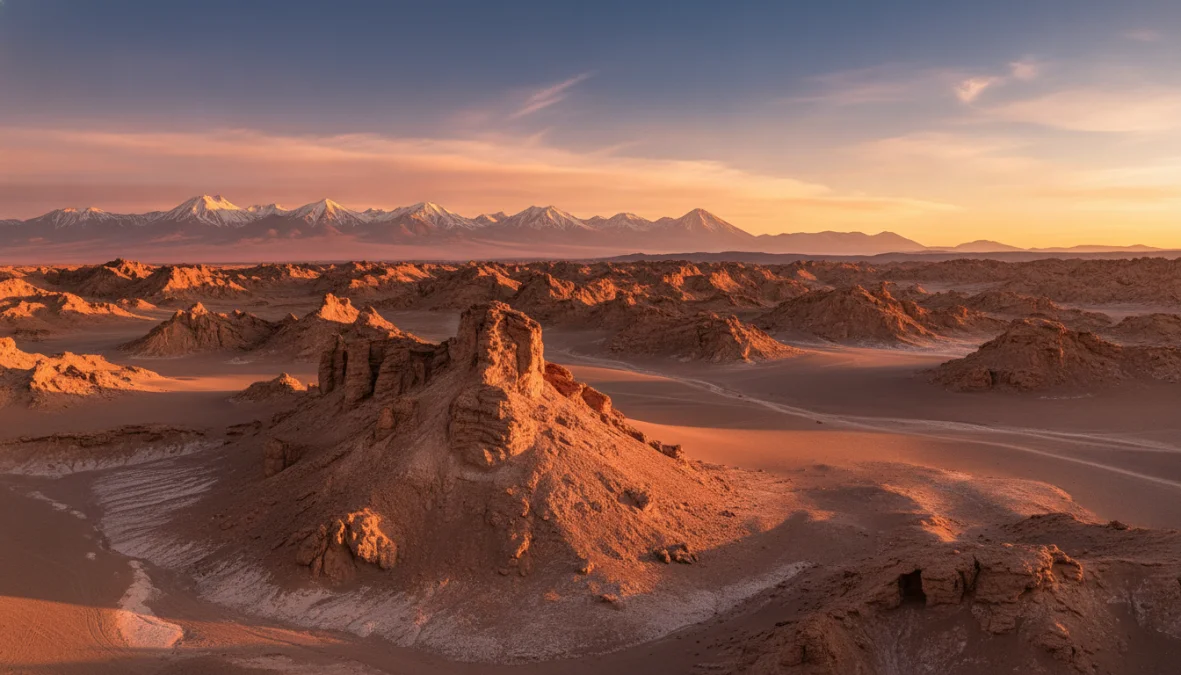
Just 13km from San Pedro, Valle de la Luna Atacama absolutely lives up to its name. These wind-sculpted rock formations, salt caves, and sand dunes create genuinely lunar landscapes that NASA has used for Mars rover testing. The main valley features dramatic rock pinnacles rising from white salt deposits, with coloration ranging from chalk white to rust red depending on mineral content.
The classic visit happens late afternoon, culminating in sunset from the main dune—a spectacle where the valley transforms through shades of pink, purple, and gold as the sun drops behind the Andes. Plan for 3-4 hours total, including the short hikes to different viewpoints. The Three Marias rock formations and the amphitheater-like Depression are highlights worth the extra walking. Bring water and sun protection; shade is essentially nonexistent.
Atacama Salt Flats and Laguna Chaxa
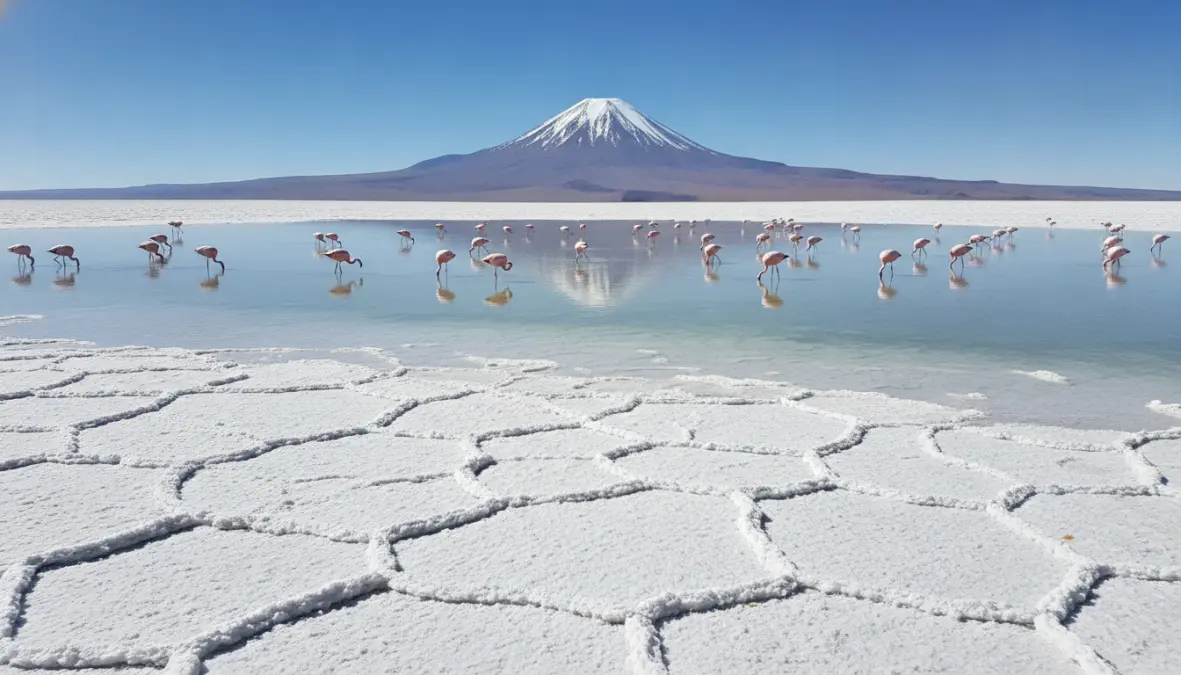
The Salar de Atacama ranks as Chile’s largest salt flat at over 3,000 square kilometers—a blinding white expanse of crystallized minerals flanked by volcanic peaks. Within this surreal landscape, Laguna Chaxa provides a bizarre contrast: bright blue-green lagoons where Chilean, Andean, and James’s flamingos feed on brine shrimp.
Visiting during morning hours offers the best light for photography and flamingo activity. The salt crust creates fascinating geometric patterns, and the reflection of Licancabur volcano in the lagoons makes for spectacular compositions. For those interested in an Atacama Desert salt flats photography guide, golden hour (either sunrise or late afternoon) provides the most dramatic lighting, though midday’s harsh light emphasizes the otherworldly whiteness.
Beyond Chaxa, the altiplanic lagoons of Miscanti and Miñiques sit at 4,200 meters altitude—stunning turquoise waters framed by snow-capped volcanoes. These typically form part of full-day tours that also include tiny villages like Socaire. The altitude here demands respect; move slowly and stay hydrated. Much like adventures in Jordan’s Wadi Rum desert, the landscape constantly surprises with color contrasts you wouldn’t expect from a desert environment.
Other essential stops include the Geysers del Tatio, best visited at dawn (departing San Pedro around 4am) when temperature differences cause the most dramatic eruptions. At 4,320 meters, these geothermal fields create columns of steam against the sunrise—unforgettable but freezing cold.
Atacama Desert Stargazing: The World’s Best Astronomy Experience
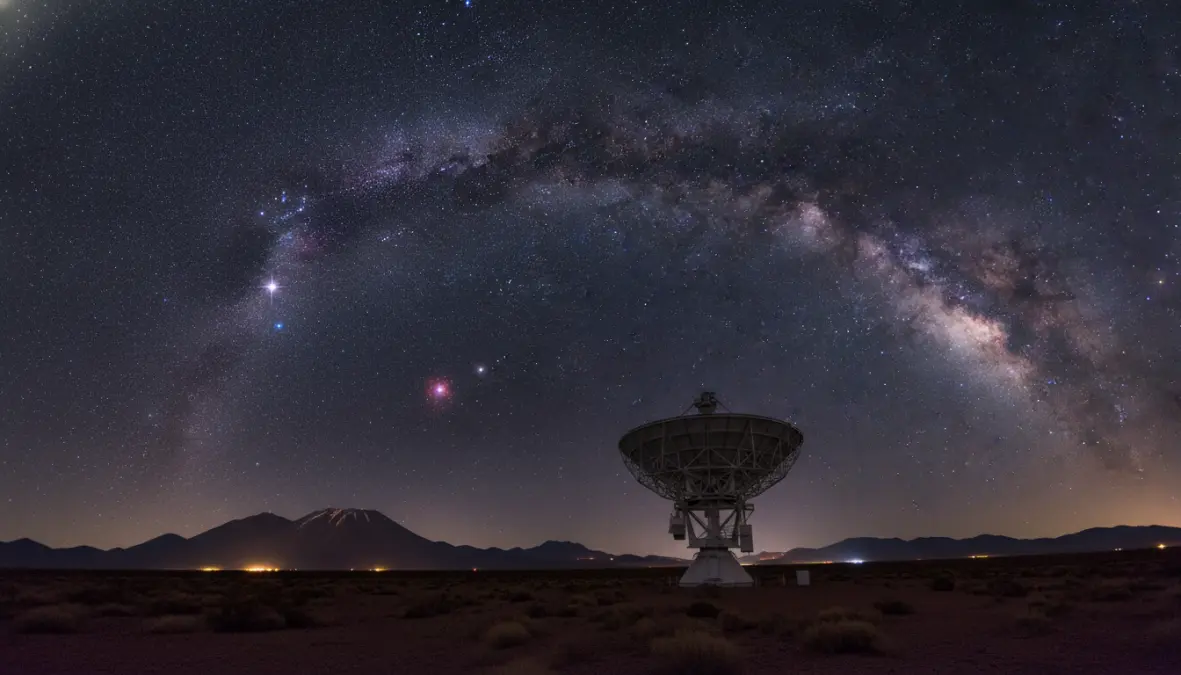
Here’s where Atacama truly shines—literally. The combination of clear night skies over 300 days annually, virtually zero light pollution, high altitude, and minimal atmospheric moisture creates conditions astronomers dream about. This explains why international projects like ALMA (Atacama Large Millimeter Array) and several other astronomical observatories chose this location.
Atacama Desert stargazing isn’t just good; it’s transformative. The Milky Way appears so vivid you’ll swear you can touch it. Constellations invisible from northern latitudes—the Southern Cross, Magellanic Clouds, and countless others—spread across the sky in overwhelming detail. Jupiter’s moons, Saturn’s rings, nebulae, and distant galaxies become visible even with basic telescopes.
Atacama astronomy tours come in two main varieties. Tourist-focused tours (around $50-80 per person) typically operate from San Pedro with 8-10 telescopes of varying sizes, offering explanations in multiple languages about what you’re viewing. Professional observatory tours provide access to more powerful equipment and deeper technical knowledge, though they’re pricier ($100-150) and book out weeks in advance.
The best stargazing locations in Atacama Desert include dedicated observation sites outside San Pedro where darkness is absolute. High altitude astronomy here means you’re literally above much of Earth’s atmosphere, reducing distortion.
For Milky Way photography enthusiasts, bring a DSLR or mirrorless camera capable of manual settings, a wide-angle lens (14-24mm ideal), and a sturdy tripod. Settings around ISO 3200-6400, f/2.8 or wider, and 15-25 second exposures work well, though experimentation is key. The galactic core is most prominent from March through October in the southern hemisphere.
Practical considerations matter significantly. Nighttime temperatures drop dramatically—even in summer, expect near-freezing conditions. When considering what to pack for Atacama Desert Chile, include warm layers: thermal underwear, fleece, down jacket, gloves, and a beanie for stargazing sessions. Tour operators sometimes provide blankets, but don’t count on it.
Book Atacama astronomy tours as soon as your travel dates are confirmed—they fill quickly during peak season. Also check moon phases; new moon periods offer the darkest skies for deep-sky objects, though a crescent moon can beautifully illuminate foreground landscapes for photography.
Frequently Asked Questions
How many days do you need in Atacama Desert? Most visitors find 3-4 full days ideal for covering major attractions without rushing. This allows for Valle de la Luna, salt flats/lagoons, Geysers del Tatio, and at least one stargazing experience. Adventure enthusiasts often extend to 5-6 days to include more remote locations or multi-day treks.
What is the best time to visit Atacama Desert Chile? April through November provides optimal conditions with minimal rainfall and consistently clear skies. Within this window, April-May and September-October offer the best balance of comfortable daytime temperatures and excellent stargazing. Atacama desert weather by month varies: June-August brings coldest nights but crystal-clear days, while December-March sees occasional afternoon clouds.
Is altitude sickness a concern in San Pedro de Atacama? San Pedro sits at 2,400 meters, which can affect some visitors. Symptoms are usually mild—headaches, fatigue, slight breathlessness. However, tours to Geysers del Tatio (4,320m) and altiplanic lagoons (4,200m) reach elevations where acclimatization matters. Spend at least one full day in San Pedro before high-altitude excursions, stay well-hydrated, and avoid alcohol initially.
How much do Atacama desert tours cost? Atacama desert stargazing tour prices and other excursions vary by operator and group size. Expect $30-50 for Valle de la Luna sunset tours, $50-80 for stargazing experiences, $60-90 for Geysers del Tatio (includes breakfast), and $70-100 for altiplanic lagoons full-day trips. Private tours cost significantly more but offer flexibility.
Can you visit ALMA observatory? ALMA offers free public tours on weekends, but spaces are extremely limited and must be reserved months in advance through their website. Tours visit the operations center at 2,900 meters (not the high-altitude array). Children under 12 aren’t permitted due to altitude concerns.
The Atacama Desert Chile delivers an adventure unlike anywhere else on Earth—a place where ancient geology meets cutting-edge astronomy, where flamingos feed on salt flats beneath snow-capped volcanoes, and where the night sky reminds you just how vast our universe truly is. Whether you’re photographing the Milky Way arcing over lunar valleys or watching sunrise steam erupt from geothermal vents, Atacama creates memories that last lifetimes. Start planning your journey to this Martian landscape—just don’t forget those warm layers for stargazing.