Travel Journaling Guide: Complete Methods to Document Your Adventures
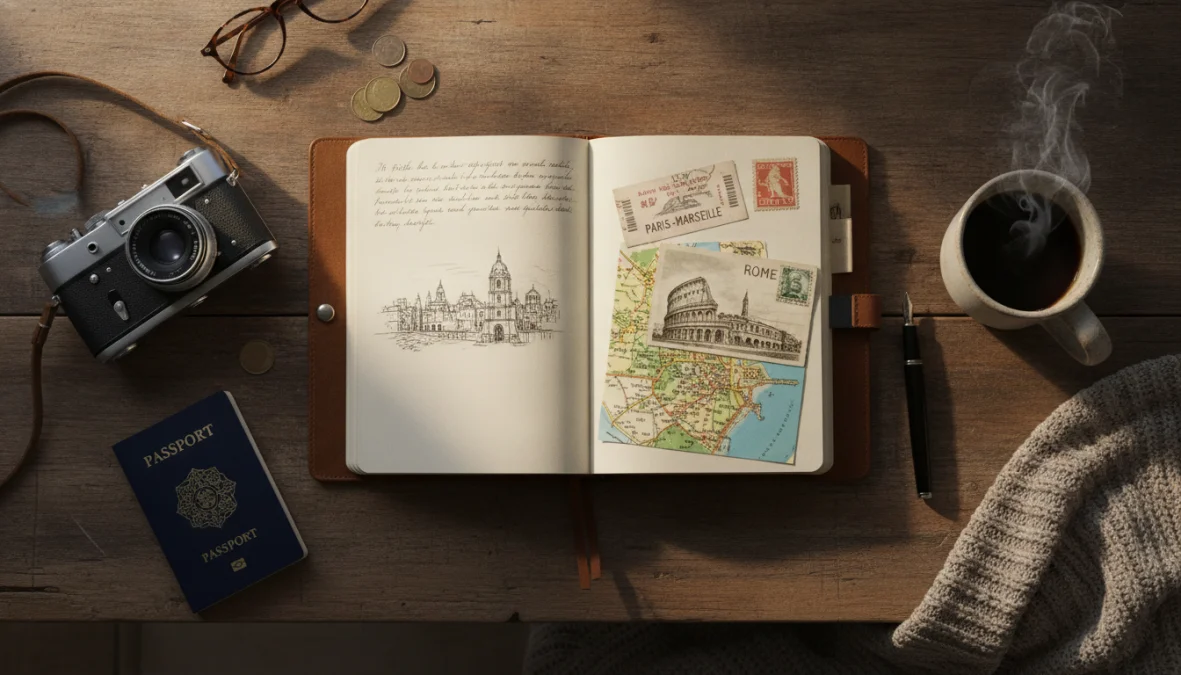
There’s something magical about flipping through a worn travel journal years later—the ticket stub from that spontaneous train ride, the sketch of a sunset you couldn’t quite capture on camera, the half-coherent notes scribbled after an incredible meal. If you’ve ever returned from a trip wishing you could bottle those experiences more vividly, this travel journaling guide will show you exactly how to capture the essence of your adventures in ways that photos alone never could.
Why Start a Travel Journal: Benefits Beyond Memory Keeping
Sure, travel memory keeping is the obvious reason to start journaling, but the real magic runs much deeper. When you commit to journey documentation, you’re not just recording what happened—you’re fundamentally changing how you experience travel itself.
First, journaling forces you into a state of mindfulness. Instead of rushing from landmark to landmark, you start noticing the texture of cobblestones under your feet, the particular shade of blue in a Greek harbor, or the way street vendors arrange their produce. This heightened observation transforms ordinary moments into memorable experiences. You become a participant rather than a tourist checking boxes.
Psychologically, adventure journaling helps process the emotional complexity of travel. That disorienting first day in a new country, the unexpected kindness of strangers, the frustration of language barriers—writing through these moments gives them meaning and context. Many travelers report that journaling helps them understand themselves better, revealing patterns in what excites or challenges them.
There’s also a beautiful gift-to-future-self aspect. Your journal becomes a time capsule that brings back not just facts, but feelings. Years later, you won’t remember every museum visit, but you’ll remember exactly how you felt watching sunrise from that viewpoint, because you took ten minutes to describe it.
Finally, journaling improves your writing and communication skills without you even trying. Regular practice makes you more articulate about experiences and emotions—a skill that translates far beyond travel.
Essential Travel Journal Methods and Techniques
The beauty of travel diary methods is that there’s no single “right” way. Your journal should match your personality, travel style, and creative preferences. Let’s explore the most effective approaches so you can build your personalized system.

Traditional Writing-Based Methods
The classic narrative approach involves daily entries describing what you did, saw, and felt. This travel writing technique works beautifully for natural writers who think in words. Start each entry with the date, location, and perhaps the weather (you’ll be surprised how evocative “cold drizzle in Edinburgh” becomes years later).
Stream-of-consciousness journaling captures raw, unfiltered impressions. Don’t worry about grammar or structure—just write exactly what you’re thinking and feeling in the moment. This method excels at preserving authentic emotional states that you might filter out in more polished writing.
Structured prompts provide scaffolding when you’re not sure what to write. Try frameworks like: “Today I saw… tasted… learned… was surprised by… want to remember…” These travel journal prompts for beginners ensure you capture diverse aspects of each day without overthinking.
Dialogue capturing is underused but powerful. Record interesting conversations verbatim when possible—the hostel owner’s recommendations, the taxi driver’s perspective on local politics, or fellow travelers’ stories. These voices add dimension that pure description can’t match.
Sensory descriptions anchor memories. Don’t just write “visited the market”—capture the smell of spices, the chaos of vendors calling out, the sticky heat, the riot of colors. Engaging all five senses creates immersive entries.
Timing matters too. Morning journaling helps plan your day and set intentions. Evening writing captures fresh details but competes with tiredness. Experiment to find what works—even quick notes that you expand later work beautifully.
Visual and Creative Documentation Approaches
Not everyone thinks in words. Travel sketching connects you to places through observation and hand-eye coordination that photography doesn’t require. You don’t need artistic talent—simple line drawings of building facades, food layouts, or landscape outlines become precious. The act of sketching slows you down and forces detailed observation.
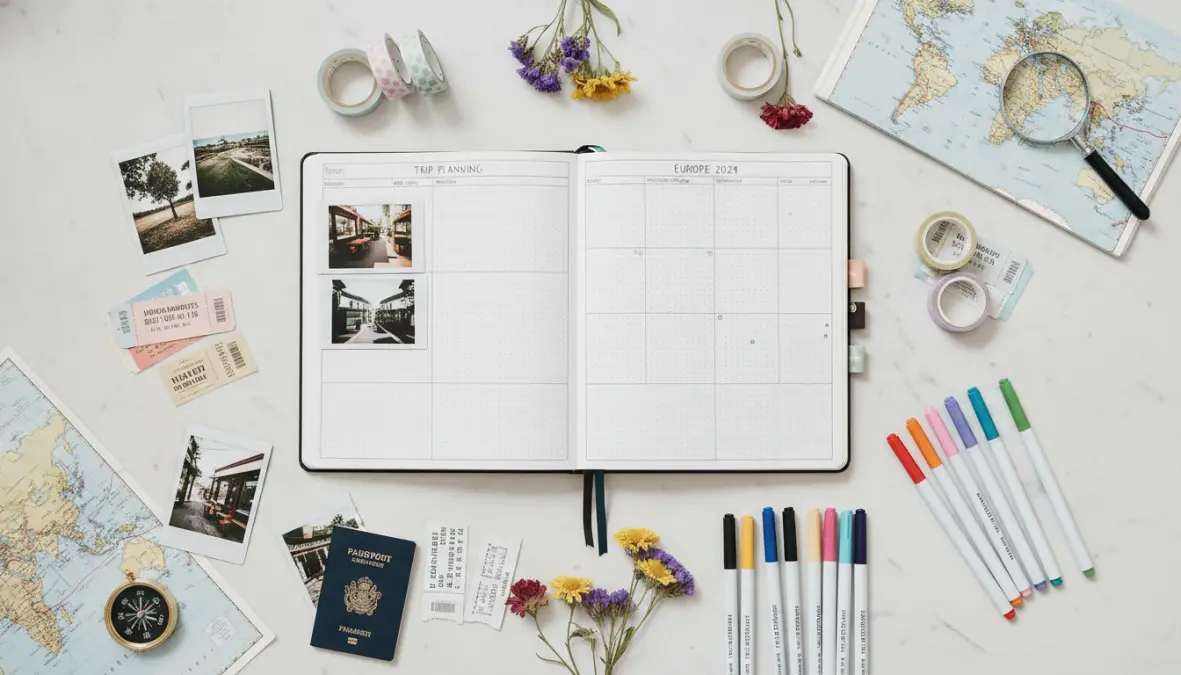
Scrapbooking approaches combine ephemera with notes. Glue in ticket stubs, restaurant receipts, postcards, pressed flowers, or festival flyers. Add quick captions explaining each item’s significance. This collage method is perfect for tactile people who want physical souvenirs integrated with their writing.
For photography lovers wondering about digital vs paper travel journaling, hybrid approaches work wonderfully. Print small photos (instant cameras are perfect) and paste them in notebooks with handwritten captions. Or reference digital photo numbers in your written journal for easy cross-referencing later.
Map marking creates geographic context. Use guidebook maps or print maps from your itinerary planning and mark places you visited, restaurants you loved, or areas you want to return to. Add color coding for different experience types.
Bullet journaling for travel adapts the productivity system for journey tracking. Create spreads for packing lists, daily logs in abbreviated form, budget tracking, and future travel wishlists. The modular format suits organized minds who appreciate structure.
Mixed media combines everything—writing, sketching, photos, collage, even fabric swatches or sand samples. Your journal becomes an art object itself, though remember: creativity matters more than perfection.
Practical Tips to Build a Sustainable Travel Journaling Habit
The best travel journal ideas mean nothing if you don’t actually maintain the habit. Here’s how to make journaling sustainable rather than another source of travel stress.
Choose your format wisely. Notebooks work offline, feel romantic, and never run out of battery. Apps offer searchability, cloud backup, and integrated photos. Many travelers use both—quick phone notes during the day, then transferring highlights to a physical journal. When packing for trips (perhaps using proper organization systems), include your journal where you’ll see it daily.
Create realistic routines. Committing to “write every detail every day” leads to guilt and abandonment. Instead, try “15 minutes before dinner” or “bullet points during transit times.” Quality beats quantity—three vivid sentences capture more than three pages of boring summary.
Combat writer’s block with templates. When words won’t flow, use simple frameworks: “Right now I’m sitting… I can see… I just… Tomorrow I want to…” Or list-based entries: “5 things that surprised me today” or “3 conversations worth remembering.”
Accept imperfection. Missed days happen. Instead of quitting, do quick catch-up entries: “Past three days in bullet points…” Your future self will thank you for imperfect documentation over perfect silence.
Protect your journal like you would your travel insurance—it’s irreplaceable. Use waterproof covers, don’t write full names of people you mention (privacy matters), and consider photocopying or photographing pages periodically as backup.
When exhaustion hits (and it will), lower standards dramatically. “Too tired. Amazing day. Palace was gold everywhere. Feet hurt. Happy.” is infinitely better than nothing. You’ll remember more than you think from these telegraphic notes.
FAQ
What should I write in my travel journal?
Focus on sensory details, emotions, conversations, and surprises rather than just itinerary facts. What did the place smell like? Who did you meet? What challenged your expectations? What made you laugh? These details create vivid memories that pure description can’t match. Include practical notes too—restaurant names, hostel recommendations, costs—for future reference.
How do you start a travel diary?
Begin before your trip with pre-travel excitement, packing thoughts, and intentions. On day one, describe your journey and first impressions rather than waiting for “something important” to happen. Start with simple prompts if blank pages intimidate you: “Right now I’m feeling… I’m most excited about… I’m nervous about…” The first entry breaks the ice.
What is the best travel journal format?
The best format is whichever you’ll actually use consistently. Traditional notebooks suit tactile people who love handwriting. Apps like Day One or Journey work for digital natives who want search functions. Hybrid approaches—phone notes expanded into physical journals—combine convenience with permanence. Consider trying several methods on shorter trips before committing.
How often should I write in my travel journal?
Daily entries are ideal but not mandatory. Aim for consistency over perfection—even brief daily notes preserve memories better than sporadic lengthy entries. Many successful travel journalists write during natural downtime: morning coffee, evening wind-down, or during transit. On exhausting days, bullet points suffice. The goal is sustainable documentation, not literary masterpieces.
Do I need artistic skills for travel journaling?
Absolutely not. Simple stick figures, rough maps, and basic sketches add enormous value without requiring talent. Travel sketching is about observation and personal meaning, not museum-worthy art. Many travelers combine their limited drawing skills with photos, ticket stubs, and writing for rich mixed-media journals. Your journal is for you—authenticity matters infinitely more than skill.
Your travel journal isn’t just a record of where you went—it’s proof of who you were in those moments, wrestling with new experiences, opening yourself to wonder, and collecting stories that will shape you for years. Whether you choose elaborate scrapbooking spreads or minimalist bullet points, whether you’re documenting adventures from Cape Town to Portugal’s Algarve, the simple act of pausing to document transforms travel from consumption into connection. Start today—even if your next trip is months away—by choosing your format and writing your first entry about where you dream of going. Your future self will thank you for beginning this practice of preserving not just your wanderlust memories, but the richness of being fully present in your adventures.