Best Travel Snacks: The Ultimate Guide to Portable Food for Flights and Road Trips
You’re stuck at the airport with overpriced, underwhelming snacks staring back at you from the vending machine. Or maybe you’re three hours into a road trip when hunger strikes and the only option is a sketchy gas station with questionable food safety practices. Sound familiar? Whether you’re jet-setting across continents or cruising down the highway, having the best travel snacks on hand can make or break your journey. Smart snacking isn’t just about satisfying hunger—it’s about maintaining energy, saving money, and avoiding the dreaded travel hangry meltdown. Let’s dive into everything you need to know about choosing, packing, and enjoying portable travel food that actually tastes good and keeps you going.
What Makes the Best Travel Snacks: Essential Criteria
Not all snacks are created equal when it comes to travel. The best travel snacks meet several crucial criteria that separate convenient options from disaster-waiting-to-happen choices. First and foremost, they need to be non-perishable—anything requiring refrigeration is a no-go unless you’ve got a cooler situation sorted. Mess-free is another non-negotiable; nobody wants chocolate melting all over their carry-on luggage or crumbs creating a disaster zone in the car.
For air travel specifically, TSA compliance becomes critical. Solid foods are generally fine, but the 3-1-1 rule applies to anything liquid or paste-like (more on that shortly). Nutritional value matters too—while candy bars might provide quick energy, they’ll leave you crashing before your layover ends. The ideal packable snacks for flights offer a balance of protein, healthy fats, and complex carbohydrates to sustain energy levels throughout your journey.
Here’s your practical checklist for evaluating portable travel food:
- Non-perishable at room temperature for extended periods
- Individually wrapped or resealable packaging
- Won’t melt, leak, or create mess in varying temperatures
- Provides sustained energy (protein + fiber combination)
- TSA-compliant for air travel (solid, not liquid/gel)
- Easy to eat without utensils or preparation
- Compact and lightweight to maximize luggage space
Top Travel Snack Ideas by Journey Type
Different travel scenarios call for different snacking strategies. What works perfectly for a cross-country flight might be impractical for a winding mountain road trip. Let’s break down the best travel snacks by journey type so you’re always prepared, whether you’re navigating airport security or hitting the open road.
Best Airplane Snacks and TSA-Approved Options
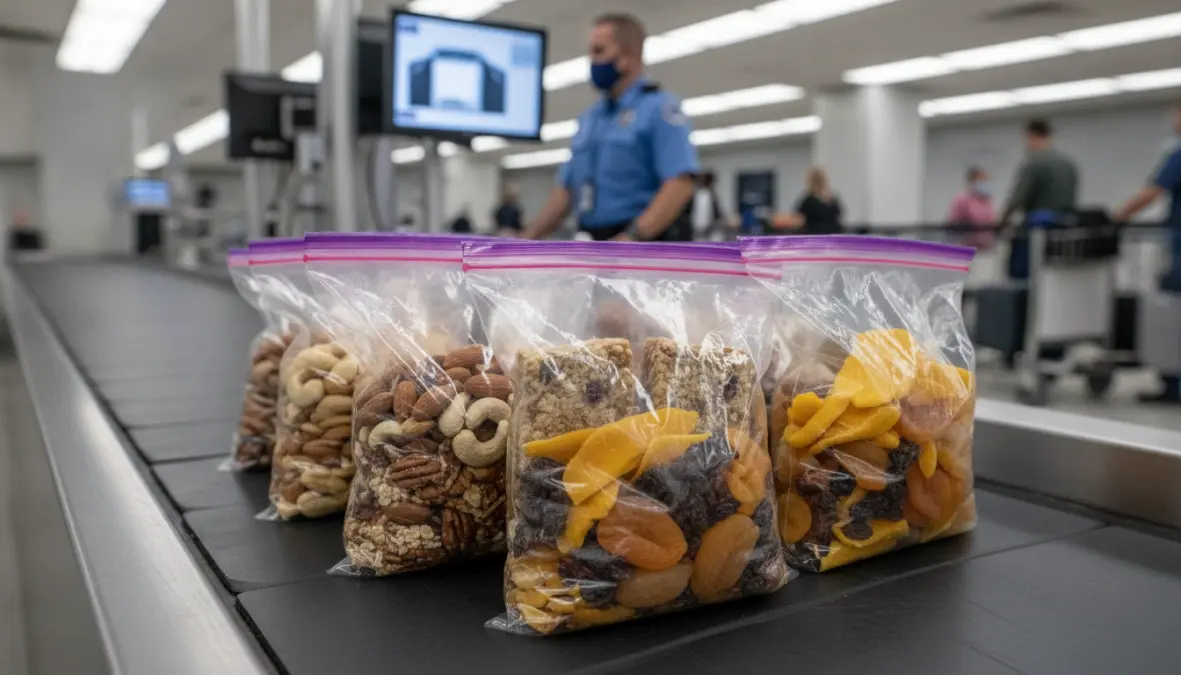
Navigating airport security with snacks requires understanding TSA regulations. The good news? Most solid foods are perfectly fine to bring through security checkpoints. The 3-1-1 rule applies to liquids, gels, and pastes—meaning items like yogurt, peanut butter, hummus, or liquid nutrition drinks must be 3.4 ounces or less and fit in a single quart-sized bag. However, once you’re past security, you can purchase larger liquid items in the terminal.
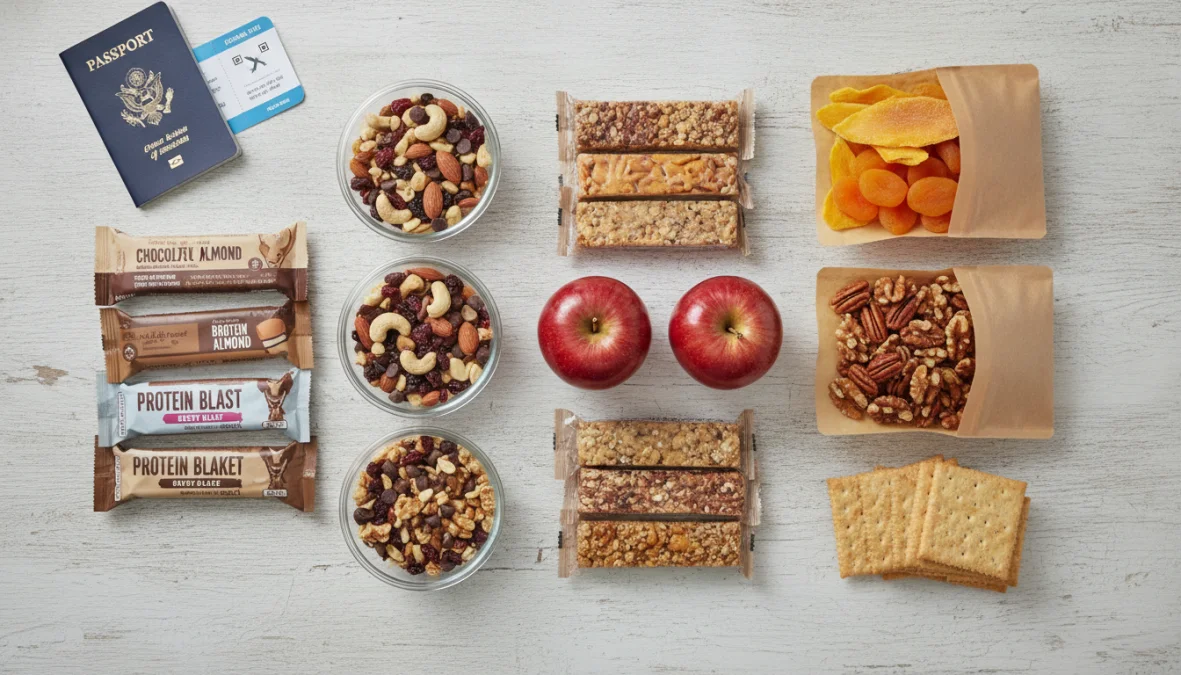
The best healthy snacks for long flights include raw almonds, cashews, or mixed nuts (unless you have allergies to consider). Protein bars are incredibly convenient and come in countless flavors—look for options with at least 10g of protein and minimal added sugars. Dried fruit like apricots, mango, or cranberries provides natural sweetness and fiber. Whole grain crackers paired with individual cheese portions (yes, cheese travels well for several hours) create a satisfying combo. Beef jerky or turkey sticks offer serious protein punch for airplane snacks.
Other TSA approved snacks that frequent travelers swear by: granola bars, trail mix, rice cakes, pretzels, popcorn (pre-popped), dark chocolate squares, and energy balls. Pro tip: pack these in your personal item rather than checked luggage for easy access during the flight.
Road Trip Snacks for Long Drives
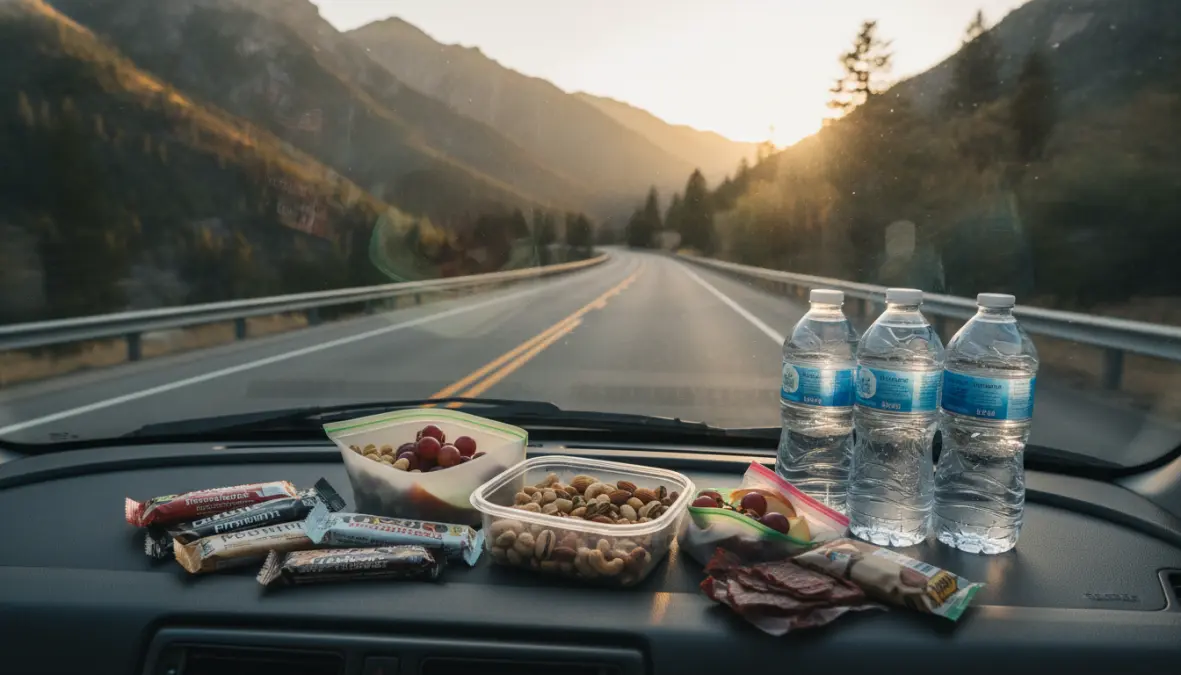
Road trips demand snacks that won’t create driving hazards or melt into oblivion in a hot car. The best travel snacks that won’t melt become your MVPs here. Think crunchy rather than creamy, sturdy rather than delicate. Mess free snacks for road trips keep your vehicle clean and your focus on the road.
For savory options, consider individual chip bags, roasted chickpeas, savory crackers, pretzels, or veggie straws. Protein snacks for long car rides include hard-boiled eggs (if consumed within a few hours), individual nut butter packets with apple slices, beef or salmon jerky, and protein bars. String cheese can survive several hours without refrigeration, making it perfect for moderate climates.
Sweet tooth? Dried fruit, graham crackers, animal crackers, Rice Krispies treats, or fruit leather satisfy cravings without the mess. Skip anything with chocolate coating unless you’re traveling in cool weather—discovering melted chocolate smeared across your upholstery is nobody’s idea of a good time. Pack everything in a dedicated snack bag or cooler for easy access, and consider using packing cubes for better organization of your road trip essentials.
Healthy Travel Snacks: Nutritious Options to Keep You Energized
Let’s be real—travel often derails our best nutritional intentions. But choosing healthy travel snacks doesn’t mean sacrificing taste or convenience. The key is finding options that deliver nutrition on the go without requiring a degree in meal prep or access to a full kitchen.
Protein-packed options keep you satisfied longer and prevent energy crashes. Beyond the obvious protein bars and nuts, consider roasted edamame (crunchy and addictive), pumpkin seeds, turkey or chicken jerky, and individual tuna or salmon pouches. Hard-boiled eggs work beautifully for flights and shorter road trips. For homemade travel snacks for flights, try making your own energy balls with dates, nuts, and oats—they’re customizable, delicious, and surprisingly travel-friendly.
High-fiber, low-sugar options provide sustained energy without the inevitable crash. Fresh fruit like apples, oranges, and bananas travel remarkably well (yes, you can bring fruit on domestic flights). Pre-cut vegetables like carrots, celery, and bell pepper strips pair perfectly with individual hummus cups (remember the 3.4-ounce TSA limit for flights). Whole grain crackers, air-popped popcorn, and oat-based bars deliver fiber and complex carbohydrates.
For those concerned about sodium intake during air travel (flying already causes water retention), seek out low sodium snacks for air travel like unsalted nuts, fresh fruit, low-sodium crackers, and homemade trail mix where you control the ingredients. Many commercial snacks contain surprisingly high sodium levels, so checking labels becomes essential.
Non perishable snacks for travel with balanced nutrition include nut butter packets with whole grain crackers, dried chickpeas, freeze-dried fruit, granola, and seed-based bars. Store-bought options have improved dramatically—brands now offer organic, low-sugar, high-protein choices that don’t taste like cardboard. Just as you’d research the best travel apps for your journey, invest time in finding snack brands that align with your dietary needs and taste preferences.
FAQ: Travel Snacks Questions Answered
What snacks can you bring through TSA?
You can bring virtually any solid food through TSA security, including nuts, granola bars, crackers, dried fruit, candy, protein bars, and sandwiches. Liquids, gels, and pastes (yogurt, peanut butter, hummus) must follow the 3-1-1 rule: 3.4 ounces or less, in a single quart-sized bag.
What are the healthiest travel snacks?
The healthiest options combine protein, fiber, and healthy fats: raw nuts, fresh fruit, vegetable sticks, hard-boiled eggs, protein bars with minimal added sugar, roasted chickpeas, and homemade trail mix. These provide sustained energy without blood sugar spikes.
How do you pack snacks for a long flight?
Use resealable bags or small containers to organize snacks in your personal item for easy access. Pack a variety to avoid flavor fatigue—mix sweet and savory, crunchy and chewy. Bring more than you think you’ll need; airport delays happen. Consider packing strategies similar to those used for long-term travel to maximize space.
Can you bring fruit on a plane?
Yes, you can bring most fresh fruits on domestic flights. However, international travel restrictions often prohibit bringing fresh produce across borders to prevent agricultural pest spread. Always consume or discard fresh fruit before landing internationally.
What snacks don’t need refrigeration?
Nuts, seeds, dried fruit, granola bars, protein bars, crackers, pretzels, popcorn, beef jerky, nut butter packets, hard cheese (for several hours), and shelf-stable fruit cups all travel well without refrigeration. Avoid anything with cream, mayo, or that specifies “keep refrigerated” on packaging.
Smart snacking transforms travel from a hungry, expensive ordeal into a comfortable, energized experience. Whether you’re planning a adventure to Machu Picchu or a budget trip to Cape Town, packing the right snacks ensures you stay fueled, save money, and enjoy your journey from start to finish. With these strategies in your arsenal, you’ll never face another disappointing airport vending machine again. Happy travels and happy snacking!