Serengeti Migration Patterns: Best Viewing Locations Month by Month
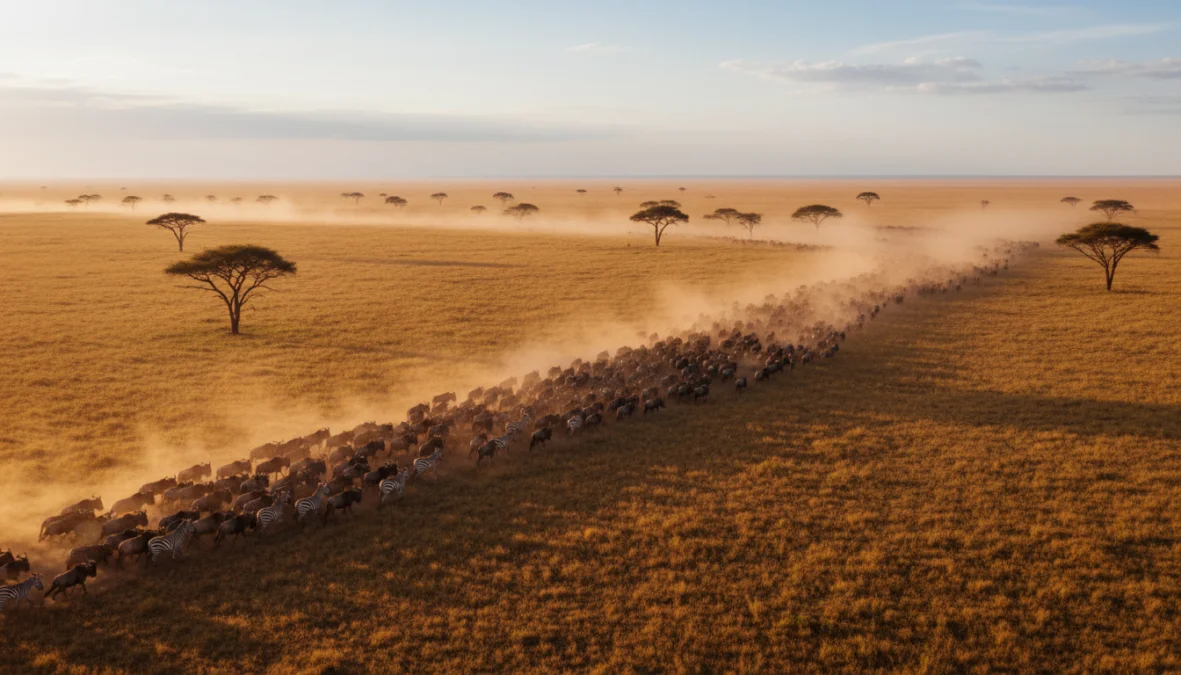
Picture this: over 1.5 million wildebeest thundering across golden plains, thousands of zebras kicking up dust clouds, and predators stalking their next meal. The Great Migration in Tanzania’s Serengeti is nature’s most spectacular show, but here’s the thing—timing is everything. Miss the right window, and you might find yourself staring at empty grasslands instead of dramatic river crossings. Understanding serengeti migration timing can make or break your safari experience, so let’s dive into exactly where these incredible herds are month by month, and where you should position yourself for front-row seats.
Understanding the Serengeti Migration Cycle
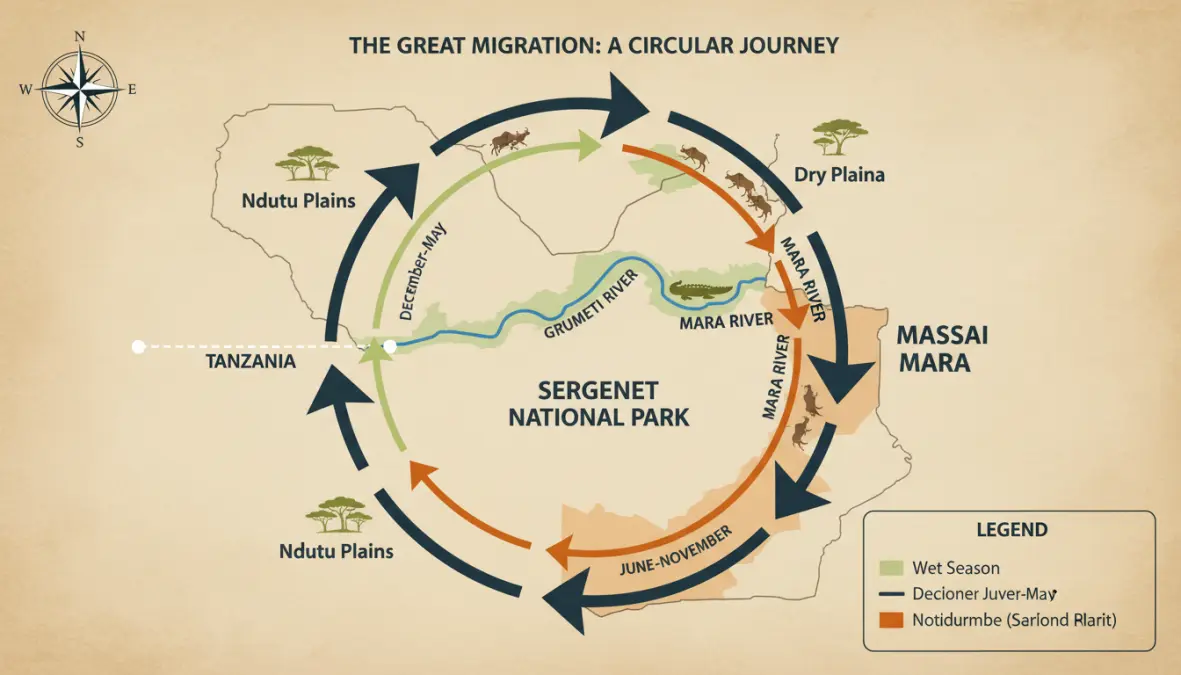
The great migration Tanzania isn’t a simple A-to-B journey—it’s a never-ending clockwise loop covering around 1,200 miles between Tanzania’s Serengeti and Kenya’s Maasai Mara. This ancient rhythm involves roughly 1.5 million wildebeest, 200,000 zebras, and 400,000 gazelles, all following the same primal instinct: find fresh grass and water, give birth in safe zones, and survive another year.
What drives this massive movement? Rainfall. The serengeti wildlife migration months are dictated entirely by seasonal rains that trigger fresh grass growth. Wildebeest are particularly picky eaters—they need short, nutritious grass that only appears after rain. The herds move in a predictable pattern through distinct serengeti migration seasons: calving in the south during the wet season, moving westward as plains dry out, pushing north to cross rivers during the dry months, then circling back south when the rains return.
Here’s the catch: the wildebeest migration schedule is never identical year to year. Early or late rains can shift timing by weeks. Some years, river crossings happen in July; other years, they peak in September. The herds don’t wear watches—they respond to weather patterns. That said, the general timeline remains consistent enough to plan a strategic safari if you know what you’re doing.
Month-by-Month Migration Calendar and Best Viewing Spots
Now let’s get practical. The serengeti migration calendar breaks down into distinct periods, each offering wildly different experiences. Using a serengeti migration map alongside this timeline will help you pinpoint exactly where to be and when.
January to March: Southern Serengeti & Ndutu Plains
This is best location serengeti migration december transitioning into peak calving season. The herds concentrate on the ndutu plains and southern Serengeti, feasting on mineral-rich short grass. Between late January and February, approximately 8,000 wildebeest calves are born daily—over 400,000 in just 2-3 weeks. Predators like lions, cheetahs, and hyenas gather for the feast. The landscape is lush and green from the short rains, making for spectacular photography. This period is criminally underrated compared to river crossings.
April to May: Western Corridor & Grumeti Region
As the southern plains dry out, the herds begin their western migration. April sees scattered movements, with the long rains turning roads muddy (some camps close). By May, massive columns snake toward the western corridor. This is a quieter viewing period but offers fewer crowds and decent predator sightings as lions patrol the grumeti river area.
June to July: Western Corridor & Early Grumeti Crossings
June brings the herds fully into the western corridor. When do wildebeest migrate through grumeti? Typically late June through July. The Grumeti River crossings are less dramatic than the Mara (smaller river, fewer animals crossing simultaneously), but still feature hungry crocodiles and nervous herds. By late July, the vanguard pushes toward the northern serengeti.
August to October: Northern Serengeti & Mara River Crossings
This is peak season—the main event. Where to see serengeti migration in july transitions into the answer: northern Serengeti and Kenya’s maasai mara migration zones. The herds mass along the Mara River, crossing back and forth multiple times (they don’t just cross once and stay). August through October offers the most dramatic wildlife spectacle on Earth, though exact timing varies yearly. Expect crowds and premium prices.
November to December: Southern Migration Begins
As short rains arrive in the south, the herds begin their return journey. November sees them moving through the eastern Serengeti, while December finds them heading back toward the ndutu plains. The circle completes itself, and by late December, calving season is about to begin again. This transitional period offers excellent serengeti best time visit value—fewer tourists, lower prices, and the herds are still visible.
Prime River Crossing Months (July-October)
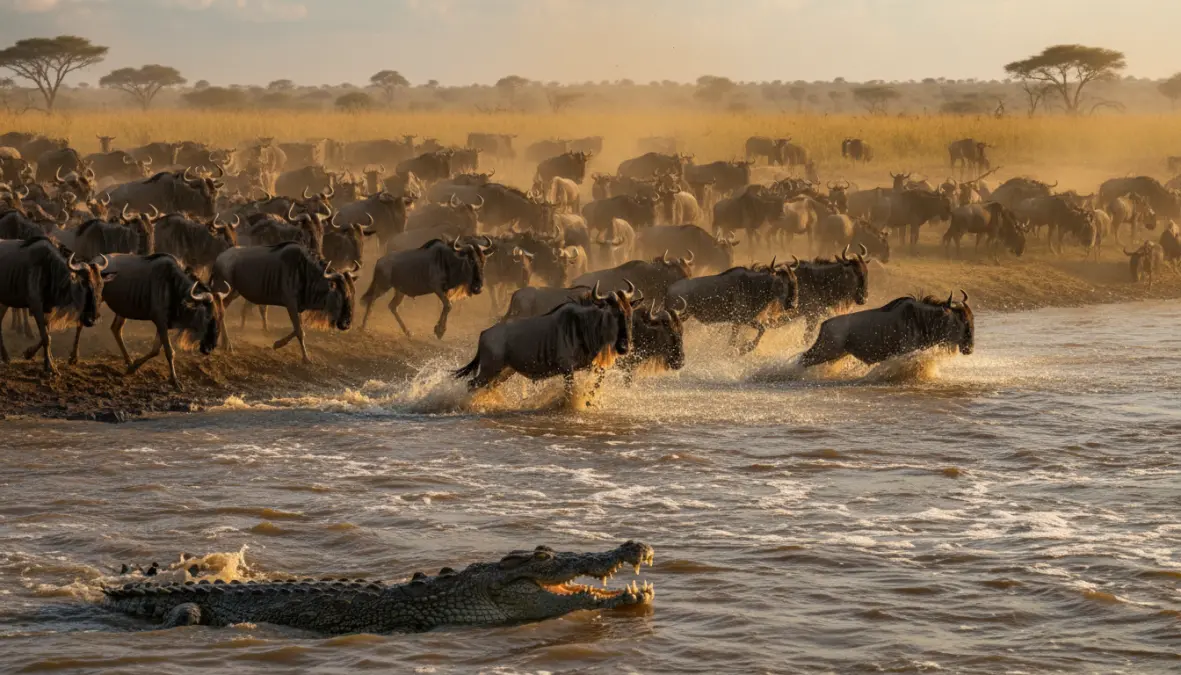
Let’s be honest: the mara river crossing is what most people fantasize about. Serengeti river crossing best time? August and September are statistically your best bet, though July and October can deliver too. The northern Serengeti areas around Kogatende and Lamai offer prime viewing spots. Thousands of wildebeest gather on riverbanks, hesitating for hours before one brave (or desperate) individual triggers the stampede. Massive Nile crocodiles wait below—some over 16 feet long. The chaos is incredible: animals swept away by currents, crocodiles lunging, dust and spray everywhere. But here’s the reality check: crossings are unpredictable. The herds might cross at dawn, noon, or not at all on your watching day. Predator activity serengeti peaks during this period as lions and leopards patrol crossing points.
Calving Season Spectacle (January-February)
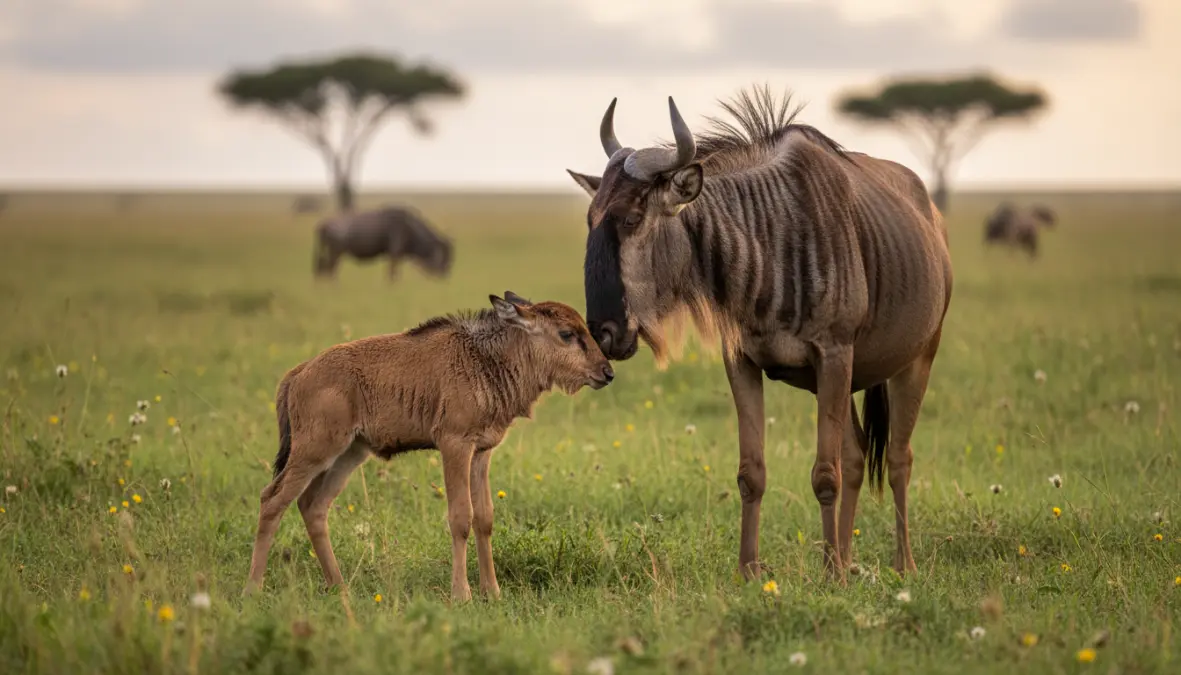
If you ask seasoned safari guides for the best month to see wildebeest migration, many will whisper: February. The wildebeest calving season in the southern Serengeti and Ndutu offers something river crossings can’t—guaranteed action. Calving season serengeti migration dates run roughly mid-January through February. Over 400,000 calves are born in a concentrated 2-3 week window, an evolutionary strategy to overwhelm predators. The sheer concentration of newborns triggers a predator bonanza—you’ll see more kills here than anywhere else. Cheetahs thrive in these open plains. Photography is phenomenal with green backdrops and adorable (if doomed) calves everywhere. Plus, accommodation is cheaper and less crowded than the northern circuit madness.
Frequently Asked Questions About Serengeti Migration Timing
What is the best month to see the Serengeti migration?
It depends what you want. For dramatic Mara River crossings, aim for August-September in the northern Serengeti. For calving season action and predator activity, February in Ndutu is unbeatable. June-July offers Grumeti crossings with fewer crowds. There’s no single “best” month—each period delivers different wildlife spectacles.
Can you see the migration year-round?
Yes! The migration never stops—it’s a continuous cycle. The herds are always somewhere in the Serengeti-Mara ecosystem. The question isn’t whether you’ll see migration animals, but what behavior you’ll witness. Even “off-peak” months like April or November offer sightings, just different locations and dynamics than peak season.
When are the Mara River crossings?
Typically July through October, with August and September being most reliable. However, timing varies by 2-4 weeks depending on rainfall patterns. The herds cross multiple times in both directions (north into Kenya, south back to Tanzania), so the window is actually quite long, though unpredictable day-to-day.
Is the migration guaranteed at certain times?
The great migration route is predictable in general terms, but exact timing and locations fluctuate. Calving season (January-February) is most “guaranteed” because it’s tied to birthing rather than just movement. River crossings are less predictable—you might wait days. Working with experienced guides and flexible itineraries maximizes your chances considerably.
How long should I stay to see the migration?
Minimum 4-5 days in the Serengeti increases your odds significantly, especially for river crossings. For calving season, 3-4 days works well since the herds are more stationary. Consider combining your safari with other East African destinations—check out best safari destinations in East Africa for comprehensive planning. Don’t forget to download essential travel apps before your trip.
The Great Migration is proof that nature still runs the show on this planet. Whether you’re watching 400,000 calves take their first wobbly steps or witnessing the chaos of a Mara River crossing, understanding serengeti migration timing transforms a good safari into the trip of a lifetime. Pick your period based on what moves you most, book with reputable operators who know the migration viewing spots serengeti, and prepare for something that’ll stick with you forever. The herds are moving right now—the only question is when you’ll join them.