Angkor Wat Guide: How to Beat the Crowds and Plan the Perfect Sunrise Visit
Picture this: you’re standing in front of one of the world’s most magnificent temples, camera ready, only to find yourself shoulder-to-shoulder with hundreds of other tourists, all jostling for the same Instagram shot. Sound familiar? Don’t worry—with the right angkor wat guide strategies, you can experience this ancient wonder in relative peace, catching that perfect sunrise without the chaos. Let’s dive into how to make your visit truly magical.
Planning Your Angkor Wat Visit: Timing and Tickets
Getting your timing right is absolutely crucial for beating the crowds at Angkor Wat. The best months to visit are November through February, when temperatures are cooler and humidity is lower. Avoid Chinese New Year and major holidays when visitor numbers spike dramatically. Weekdays, especially Tuesday through Thursday, see significantly fewer visitors than weekends.
For tickets, you have three options: a 1-day pass ($37), 3-day pass ($62), or 7-day pass ($72). Purchase these at the official Angkor Enterprise ticket office, open from 5am to 5:30pm. Pro tip: buy your ticket the evening before your sunrise visit—you can enter after 5pm without using your first day, perfect for a sunset reconnaissance mission.
Pack smart for your angkor wat temple visit: bring plenty of water, sunscreen, a hat, and comfortable walking shoes. The dress code is strict—shoulders and knees must be covered to access upper levels. Lightweight, breathable fabrics work best in the tropical heat. A small flashlight is invaluable for navigating in pre-dawn darkness, and don’t forget backup batteries for your camera.
Understanding the temple rules helps avoid disappointment: no touching the ancient carvings, no climbing on structures (except designated areas), and respectful behavior throughout. Similar to planning other iconic destinations like Machu Picchu, researching ahead saves precious time on the ground.
How to Experience Sunrise at Angkor Wat Without the Crowds
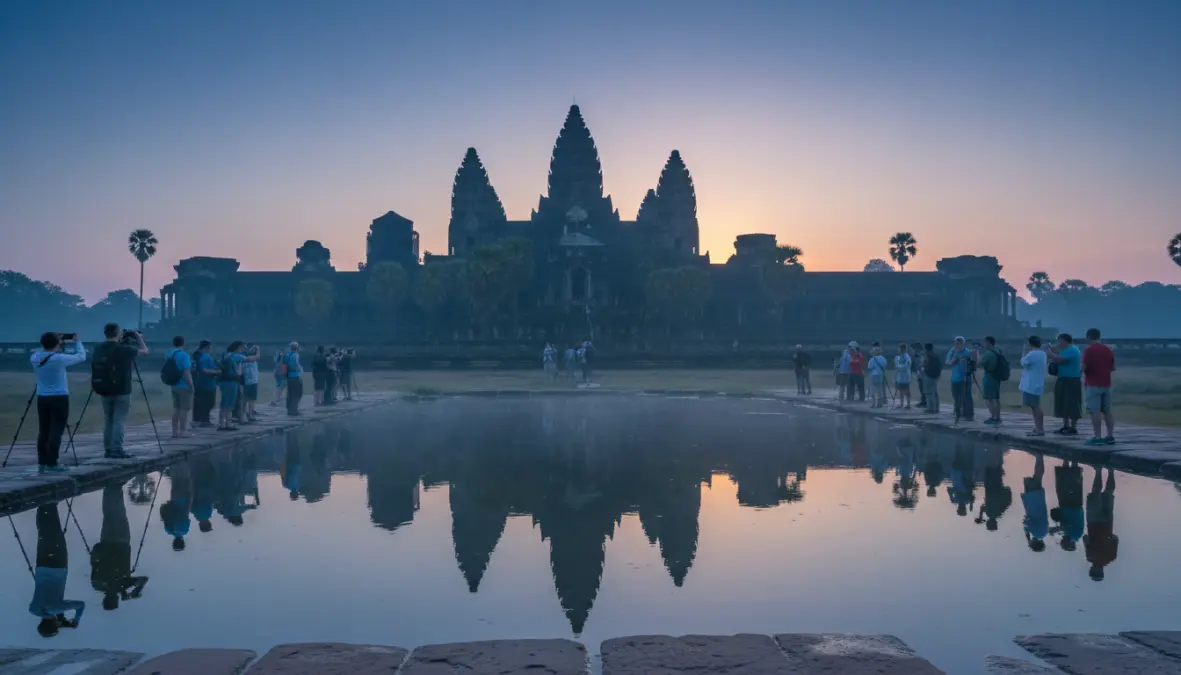
Here’s the insider secret most angkor wat guides won’t tell you: arriving at the standard 5am recommendation puts you right in the middle of peak crowd chaos. Instead, aim to arrive by 4:30am during high season, or even 4:45am in low season. This gives you time to scout positions and set up before the masses arrive.
The famous reflecting pools on the left side of the entrance are tourist magnets—hundreds congregate here for that classic shot. For a better sunrise visit experience, head to the right side reflecting pool which sees about 60% fewer people. Better yet, position yourself on the outer edges of either pool rather than fighting for front-row center spots. The view is equally stunning, and you’ll actually have breathing room.
Want to really beat the crowds? Try the ‘reverse tour’ strategy: while everyone photographs the sunrise, you should be among the first to enter the temple complex itself around 5:30am. Explore the galleries, bas-reliefs, and climb to the third level while it’s nearly empty. By 7am, when the masses finally move into the temple, you’ll have captured incredible photos and can head out to explore other temples in the complex.
The south entrance offers another clever alternative to the main eastern entrance. It’s further from parking areas, which naturally deters many visitors. You’ll sacrifice some of the classic frontal views, but gain solitude and unique perspectives. Photography enthusiasts should bring a wide-angle lens for architecture shots and a zoom lens for capturing bas-relief details in changing light.
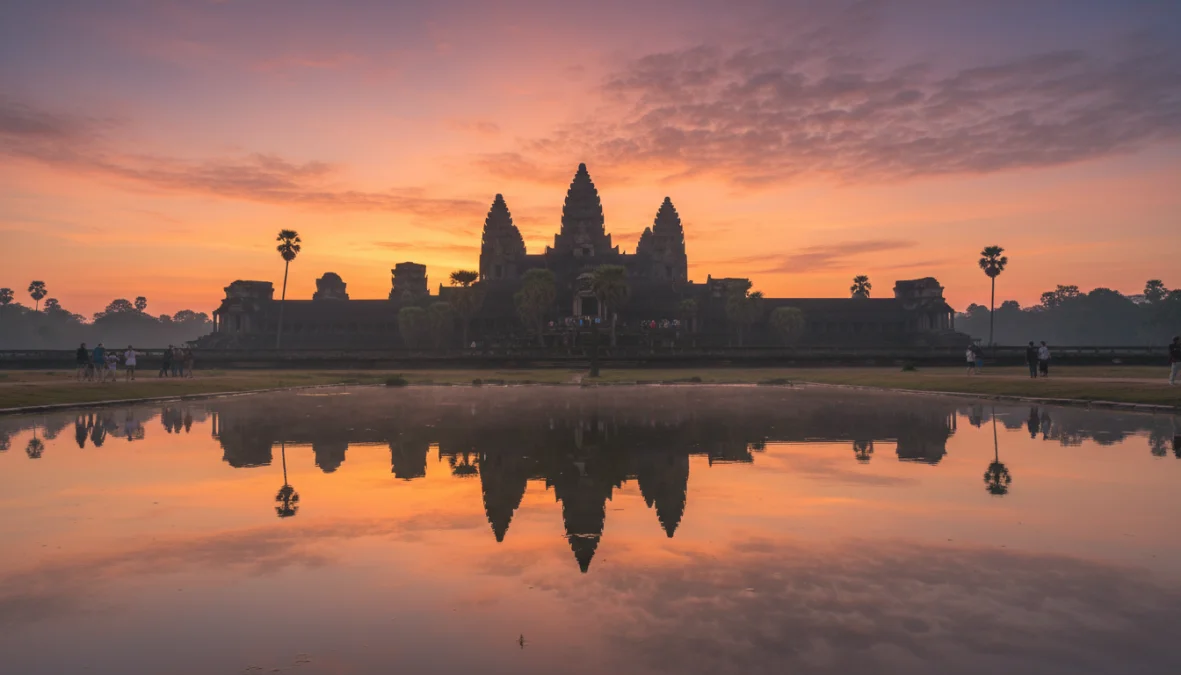
Expect the actual sunrise moment to last about 15-20 minutes, with the sky beginning to lighten around 5:45am. The temple’s silhouette against pastel skies is breathtaking, but don’t pack up immediately after—the golden hour following sunrise bathes the sandstone in warm, incredible light perfect for photography.
Alternative Sunrise Spots Near Angkor Wat
If you’re visiting during absolute peak season or simply want a more intimate experience, consider these alternatives. Phnom Bakheng offers panoramic views over the jungle canopy, though it’s become increasingly popular. Pre Rup, a pyramid-style temple, provides elevated sunrise views with typically half the crowd. Srah Srang, a beautiful reservoir, offers serene water reflections and rarely sees more than a dozen visitors at sunrise. These options work brilliantly if you’re spending multiple days in the area—save Angkor Wat itself for a weekday morning when you can combine the iconic experience with better crowd management.
Exploring Angkor Wat Temple: Layout and Must-See Features
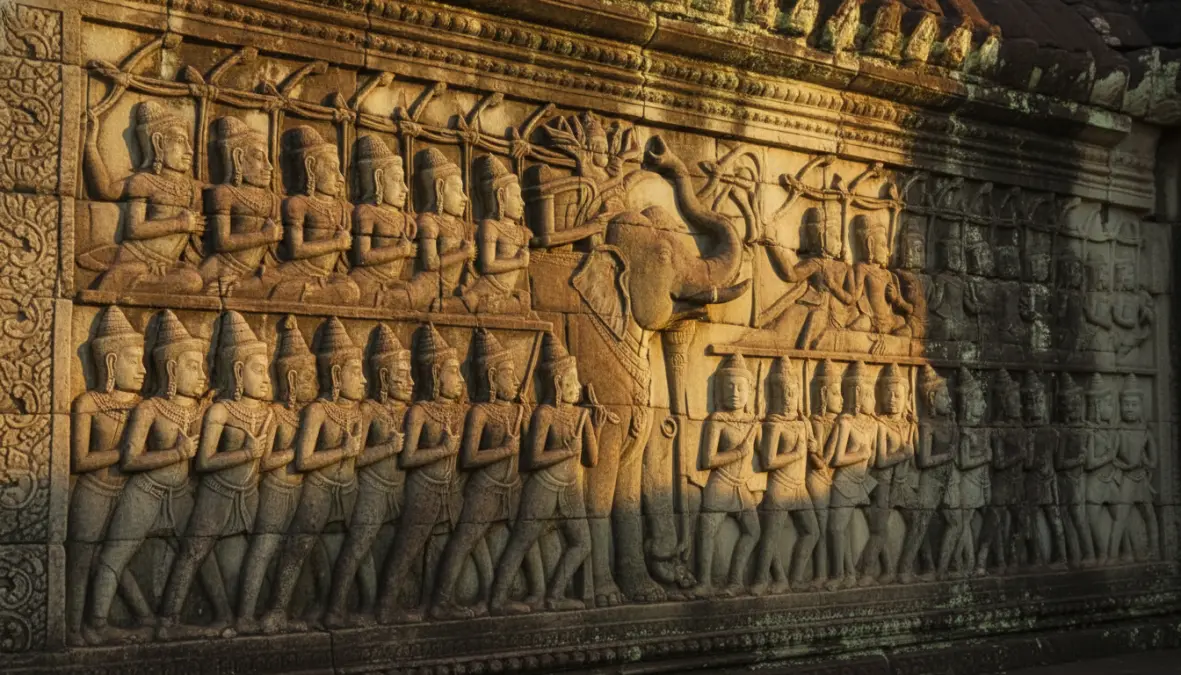
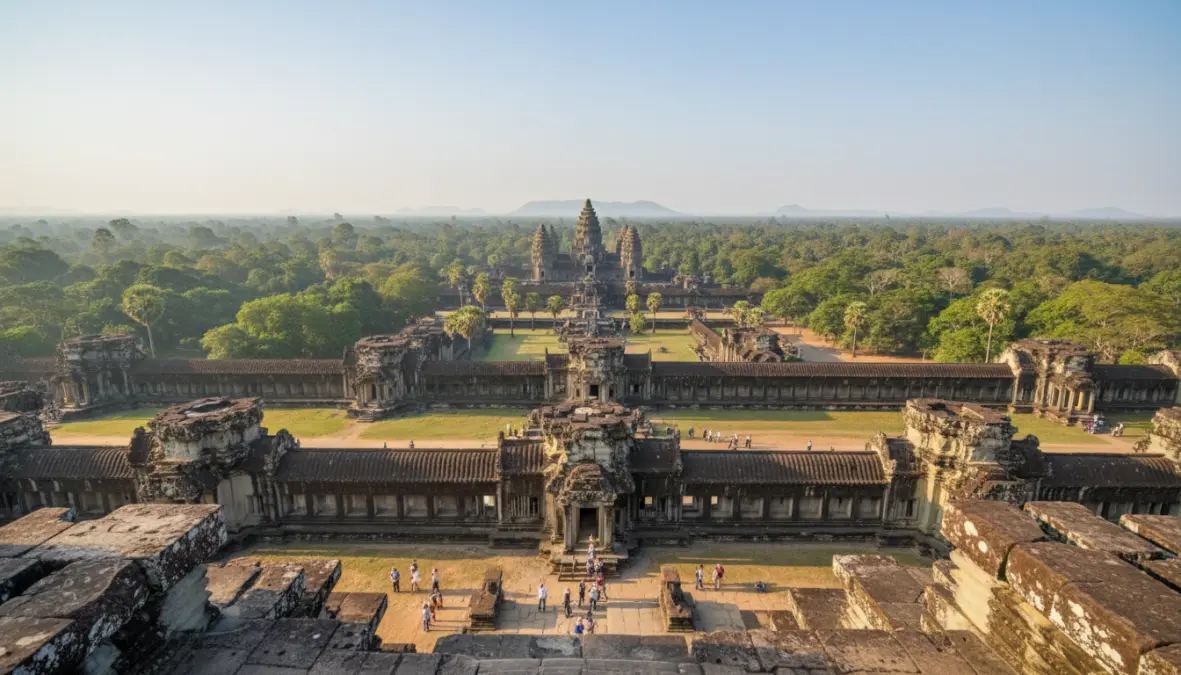
Understanding the angkor wat temple guide structure helps you navigate efficiently. The complex consists of three rectangular levels, each progressively higher and smaller than the one below. Start at the outer gallery on the first level, where 800 meters of bas-reliefs tell epic Hindu stories.
Don’t miss the Battle of Kurukshetra on the southern gallery—it’s an incredibly detailed depiction of war with thousands of carved figures. The western gallery features the Churning of the Ocean of Milk, showing gods and demons working together to extract the elixir of immortality. These reliefs are best viewed in morning light, which enhances their depth and detail.
The second level contains four connected courtyards and more intricate carvings. The third level, the most sacred area, requires modest dress and has visitor number limits. This 42-meter-high platform offers stunning views and houses the central sanctuary. Access can involve queuing, especially mid-morning, so aim to climb early.
Budget at least 3-4 hours for a thorough visit. Hiring a knowledgeable local guide ($20-30 for a half-day) adds tremendous value—they’ll explain the symbolism, point out hidden details, and share historical context you’d otherwise miss. However, independent exploration is perfectly viable with good preparation, much like approaching sustainable travel practices—do your research and respect local customs.
Frequently Asked Questions
What time should I arrive for sunrise?
Aim for 4:30am during high season (November-February) or 4:45am in low season. This gets you positioned before the biggest crowds arrive around 5am.
How long does a visit take?
Plan for 3-4 hours minimum to properly explore Angkor Wat. If you’re visiting other temples in the complex, dedicate a full day or spread visits across multiple days with a 3-day pass.
Do I need a guide?
Not essential, but highly recommended. Local guides provide historical context and symbolic interpretation that brings the carvings to life. Expect to pay $20-30 for a half-day guide.
What should I wear?
Cover shoulders and knees—required for third-level access. Lightweight, breathable fabrics work best. Comfortable walking shoes are essential as you’ll be on your feet for hours.
Can I visit Angkor Wat without seeing sunrise?
Absolutely! Mid-afternoon visits (2-4pm) see fewer crowds as most tourists focus on mornings. Late afternoon light can be beautiful for photography too.
Is it worth visiting in rainy season?
Yes, if you don’t mind occasional downpours. June through October brings dramatic skies, lush greenery, and significantly fewer tourists. Just bring rain gear and embrace the adventure.
Visiting Angkor Wat ranks among the world’s great travel experiences, joining the likes of summiting Kilimanjaro or trekking Patagonia. With smart planning and these crowd-beating strategies, you’ll create memories of this ancient wonder that go far beyond the typical tourist experience. The magic of Angkor Wat reveals itself to those who take the time to do it right—and now you have the angkor wat guide to make it happen.