Canadian Rockies Road Trip: Your Complete Banff to Jasper Highway Guide
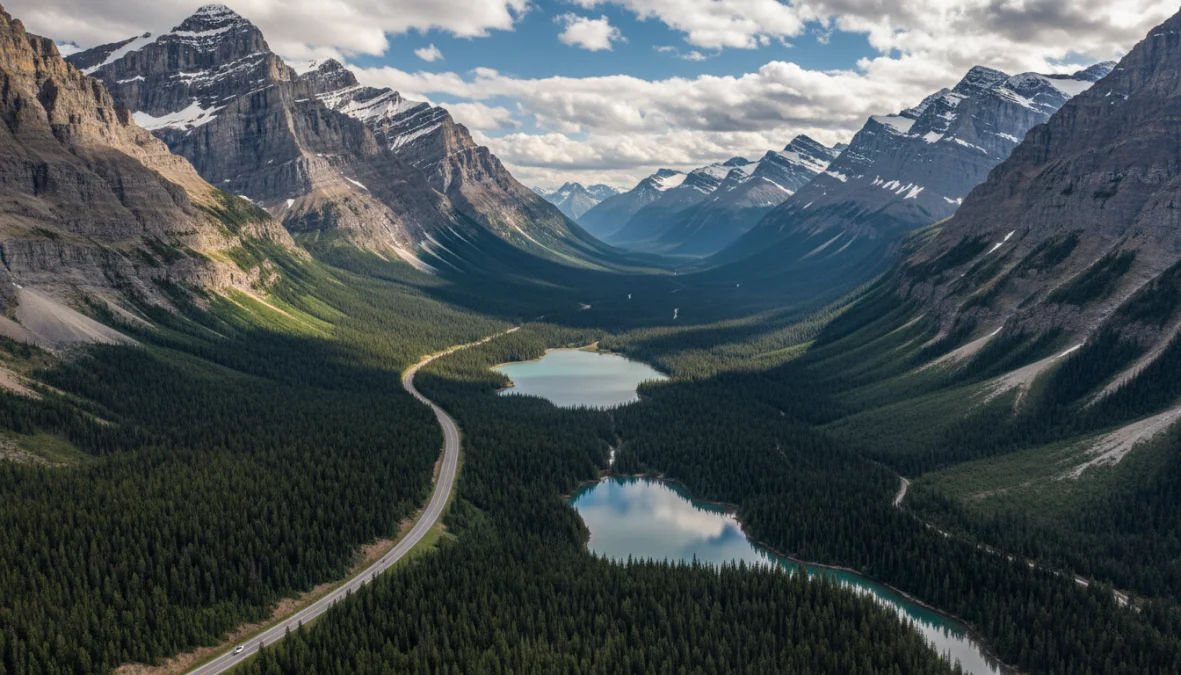
Picture this: you’re cruising along one of the world’s most spectacular mountain highways, towering peaks on either side, ancient glaciers gleaming in the distance, and turquoise lakes so vibrant they look photoshopped. Welcome to the Canadian Rockies road trip from Banff to Jasper—a journey that’ll have you pulling over every few kilometers to snap yet another jaw-dropping photo. Whether you’re a seasoned road tripper or planning your first mountain adventure, this iconic drive along the Icefields Parkway delivers scenery that rivals even the famous Scottish Highlands road trip.
Planning Your Canadian Rockies Road Trip: Essential Information
The banff jasper highway, officially known as Highway 93 North or the Icefields Parkway, stretches 232 kilometers (144 miles) through the heart of the Canadian Rockies. But don’t let that relatively short distance fool you—this isn’t a drive you want to rush. Most travelers spend anywhere from one to three days exploring this route, and honestly, you could easily spend a week and still feel like you’re missing something.
So how long to drive from banff to jasper without stops? Technically, you could do it in under three hours. But that would be like speed-running the Louvre—technically possible, but you’d be missing the entire point. Plan for at least a full day if you’re doing the express version, though two to three days is ideal for a proper canadian rockies itinerary.
The best time to tackle this rocky mountains road trip is between late May and September when the entire highway is reliably open and services are operating. July and August offer the warmest weather but also the biggest crowds. For fewer tourists and stunning fall colors, September is golden—literally. Winter driving is possible but requires serious preparation, winter tires, and acceptance that some attractions may be inaccessible.
Here’s the deal: you’ll need a national parks pass to drive this route. A day pass costs around $10 CAD per person, while an annual Discovery Pass ($72.25 for individuals, $145.25 for families) makes sense if you’re spending more than a week in the parks. Gas stations are sparse along highway 93 canada, so fill up in Lake Louise or Saskatchewan River Crossing—don’t risk running on fumes.
Direction matters less than you’d think, but many prefer driving Banff to Jasper for logistical reasons: Banff has better airport access via Calgary, and this direction puts the most dramatic scenery ahead of you as you drive. Either way works beautifully.
The Icefields Parkway: Must-Stop Attractions and Hidden Gems
Let’s talk about the best stops between banff and jasper, because this is where your banff to jasper drive transforms from a simple commute into an unforgettable adventure. Here are the can’t-miss attractions along the icefields parkway, listed in order from south to north:
Lake Louise (0 km): You’re starting strong with one of Canada’s most photographed locations. This turquoise gem, backed by Victoria Glacier, is stunning but gets absolutely mobbed. Arrive before 8 AM or after 6 PM, or better yet, base yourself here overnight to explore early morning. Allow 1-2 hours minimum.
Crowfoot Glacier (33 km): A quick roadside stop where you can view this glacier from a pullout. Named for its three-toed shape (though one toe has since melted—climate change is real, folks). Stop time: 10 minutes.
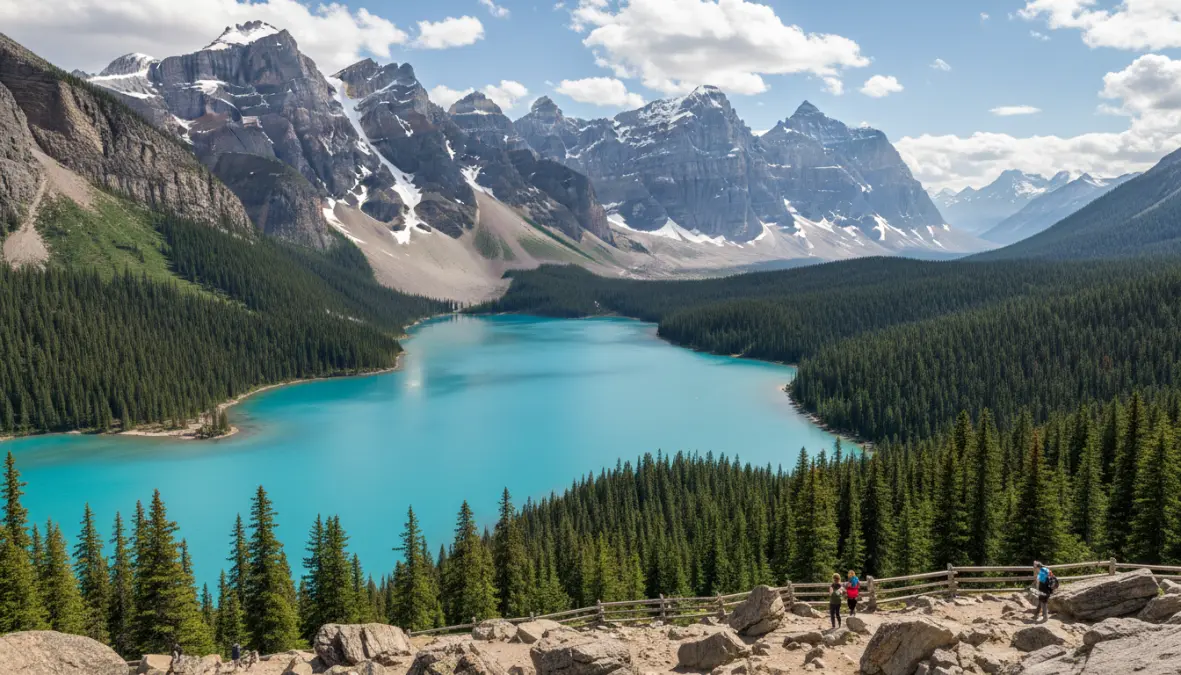
Bow Lake (36 km): Dramatically beautiful and often overlooked because everyone’s racing to Peyto Lake. The short walk to the lake’s edge is worth it, and Num-Ti-Jah Lodge makes a perfect photo backdrop. Allow 30-45 minutes.
Peyto Lake (40 km): This electric blue stunner is the Instagram star of the jasper to banff route. The viewpoint requires a 15-minute uphill walk from the parking lot. Visit midday when the glacial silt creates that signature turquoise color. Budget 45 minutes to an hour.
Mistaya Canyon (71 km): Here’s a hidden gem most people drive past. A short 500-meter trail leads to a narrow limestone gorge where the Mistaya River has carved intricate patterns. It’s quick but spectacular—allow 20-30 minutes.
Saskatchewan River Crossing (77 km): Not scenic, but essential. Gas station, small store, and lodge. Fill your tank here.
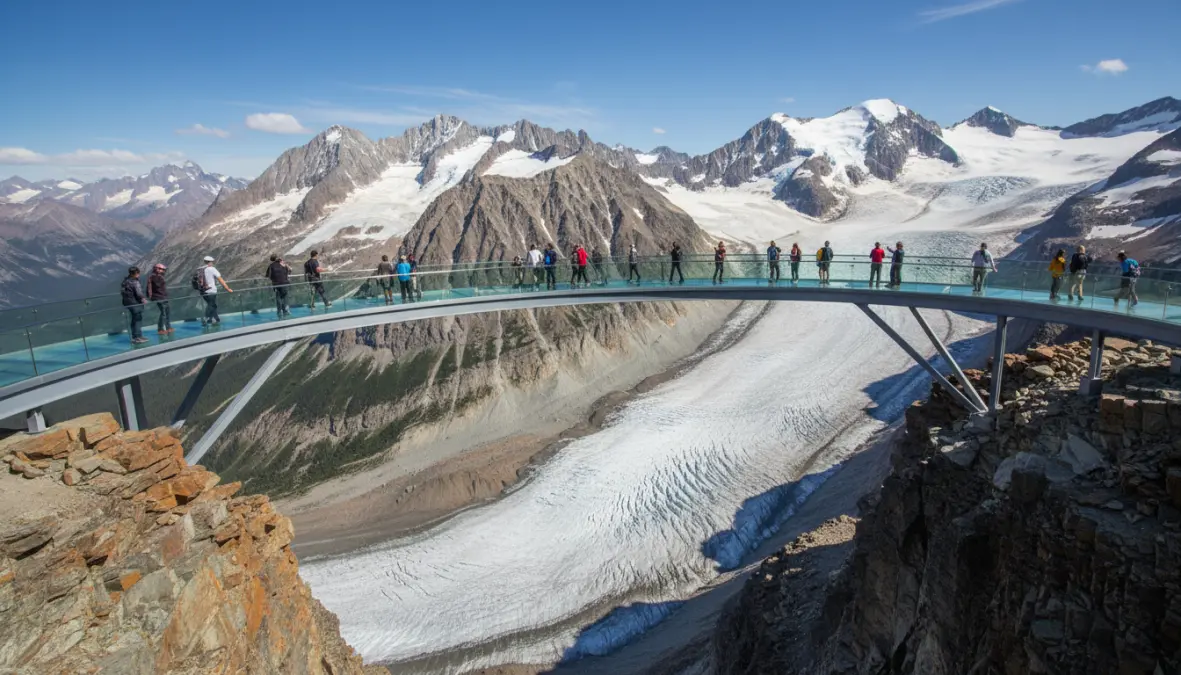
Columbia Icefield & Glacier Skywalk (103 km): The showstopper. The Athabasca Glacier is the most accessible glacier in North America, and the glass-floored Skywalk suspends you 280 meters above a valley. Ice Explorer tours onto the glacier cost around $115 CAD and are worth every penny. Budget 2-3 hours minimum for the full experience.
Tangle Falls (161 km): Another underrated stop. This multi-tiered waterfall is visible right from the road, but a short scramble gets you closer. It’s particularly photogenic in the golden hour light. Stop time: 15-20 minutes.
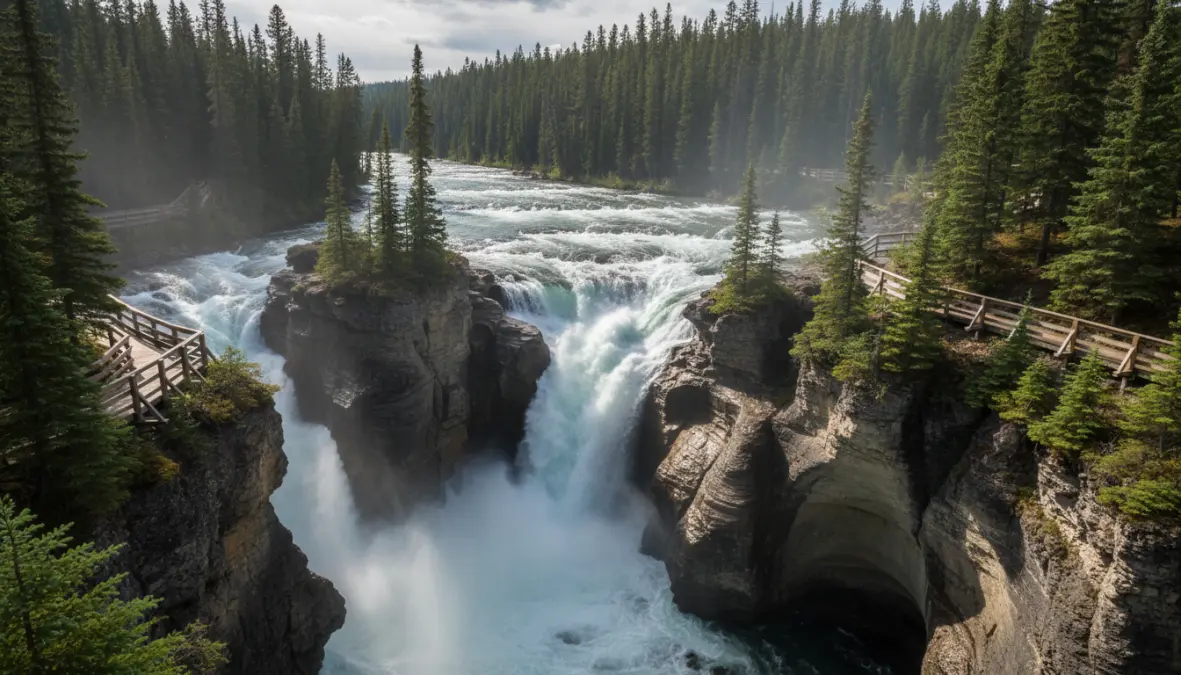
Sunwapta Falls (178 km): A short paved trail leads to powerful waterfalls where the Sunwapta River plunges through a narrow canyon. There’s an upper and lower falls; both are impressive. Allow 30-45 minutes.
Athabasca Falls (199 km): Don’t be fooled by the modest 23-meter drop—these falls are absolutely thunderous. Multiple viewpoints via well-maintained trails make this a must-stop. Budget 45 minutes to an hour.
When planning your icefields parkway must see attractions, remember that distances between stops vary. The heaviest concentration of highlights sits in the middle section, between Bow Lake and the Columbia Icefield—plan your timing accordingly.
Wildlife Viewing and Photography Tips
Wildlife viewing along this route can be extraordinary. Black bears and grizzlies frequent roadside areas, particularly in spring when they’re foraging. Elk and bighorn sheep are common near Jasper townsite, while caribou occasionally appear in the Columbia Icefield area. Mountain goats cling to cliff faces, and if you’re lucky, you might spot a moose browsing in roadside ponds.
Golden rule: stay at least 100 meters from bears and 30 meters from other wildlife. Never approach animals for photos—use a telephoto lens (200mm minimum). Early morning and evening offer the best wildlife activity and the most dramatic lighting for landscape photography.
For scenic viewpoints, bring a wide-angle lens (16-35mm) for landscapes and a polarizing filter to cut glare on those brilliant lakes. The best photo spots include Bow Lake at sunrise, Peyto Lake around midday, and Athabasca Falls in afternoon light. Download PhotoPills to plan sunrise and sunset shots—the mountain terrain creates dramatic shadow play.
Sample Itineraries and Practical Road Trip Tips
Let’s get practical with your banff to jasper road trip itinerary. Here are three options for different travel styles:
Express Route (1 Day): Start at 7 AM in Banff. Hit Lake Louise, Bow Lake, Peyto Lake, Columbia Icefield (budget 2.5 hours here), Athabasca Falls, and arrive in Jasper by 6 PM. You’ll miss some gems, but you’ll see the highlights. This answers “can you drive the Icefields Parkway in one day?”—yes, but it’s rushed.
Standard Route (2 Days): Day 1, explore Lake Louise area thoroughly, then drive to Peyto Lake and Bow Lake. Overnight at Num-Ti-Jah Lodge or backtrack to Lake Louise. Day 2, tackle Columbia Icefield in the morning when crowds are lighter, then work your way north with stops at Sunwapta and Athabasca Falls. Arrive Jasper by evening. This is the sweet spot for most travelers.
Extended Route (3 Days): Add hiking into your canadian rockies 7 day road trip. Day 1 at Lake Louise with hikes to Lake Agnes or the Plain of Six Glaciers. Day 2 focused on the central parkway with time for longer stops and perhaps the Wilcox Pass hike near the Columbia Icefield. Day 3 exploring the northern section with hikes to Cavell Meadows near Jasper. Camping options include Mosquito Creek, Rampart Creek, or Wilcox campground (book ahead).
Practical essentials: Download offline maps (AllTrails, Maps.me) because cell service is spotty. Bring layers—weather changes fast in the mountains. Pack bear spray, a first aid kit, emergency food, water, and a car phone charger. Gas up at Lake Louise and Saskatchewan River Crossing. For banff to jasper driving time and distance, calculate roughly 40-50 km/hour average with stops, not the highway speed limit.
Accommodation costs vary wildly. Camping runs $20-35 per night, budget hotels in Jasper start around $150, while luxury lodges like Fairmont Jasper Park Lodge exceed $400. The Parks Pass, gas (expect $50-70 for the round trip), and Columbia Icefield tickets add up—budget $200-300 per person minimum for a two-day trip, excluding accommodation.
Traffic peaks between 10 AM and 4 PM in summer. Popular parking lots like Peyto Lake fill up by mid-morning. Arrive early or late to beat crowds. Weather can turn quickly—summer snowstorms aren’t unheard of at higher elevations. Check road conditions at 511.alberta.ca before departing.
FAQ
How long does it take to drive from Banff to Jasper?
Without stops, the 232 km drive takes about 2.5-3 hours. With stops at major attractions, plan for 6-8 hours minimum for a one-day trip, though 2-3 days allows you to truly experience the route without rushing.
Can you drive the Icefields Parkway in one day?
Absolutely, but it’s a long day. Start early (7 AM), prioritize your must-see stops, and you can hit the major highlights and arrive in Jasper by evening. However, two days is significantly more enjoyable and less exhausting.
Is the Banff to Jasper highway open year-round?
Yes, Highway 93 remains open year-round, but winter conditions (November through April) require winter tires, chains, and experience driving in snow. Some attractions and facilities close in winter, and avalanche control can cause temporary closures.
Do I need an AWD vehicle for Highway 93?
Not in summer. Any reliable vehicle works fine from May through September. However, AWD or 4WD with winter tires is highly recommended for winter travel, and some rental companies require it for mountain driving in shoulder seasons.
Where should I stop for gas on the Icefields Parkway?
Fill up before leaving Banff or Lake Louise. The only gas station along the parkway is at Saskatchewan River Crossing (77 km from Lake Louise). The next stations are in Jasper, another 155 km north. Don’t risk running low—services are extremely limited.
The canadian rockies road trip from Banff to Jasper isn’t just a drive—it’s a journey through some of the planet’s most pristine wilderness. Whether you’re chasing waterfalls, photographing glaciers, or simply soaking in the mountain majesty, this route delivers bucket-list moments around every bend. Pack your sense of adventure (and your camera battery), and prepare for a road trip that’ll ruin you for ordinary drives forever. If this whets your appetite for epic road journeys, you might also love exploring New Zealand’s South Island, another contender for the world’s most scenic drive.